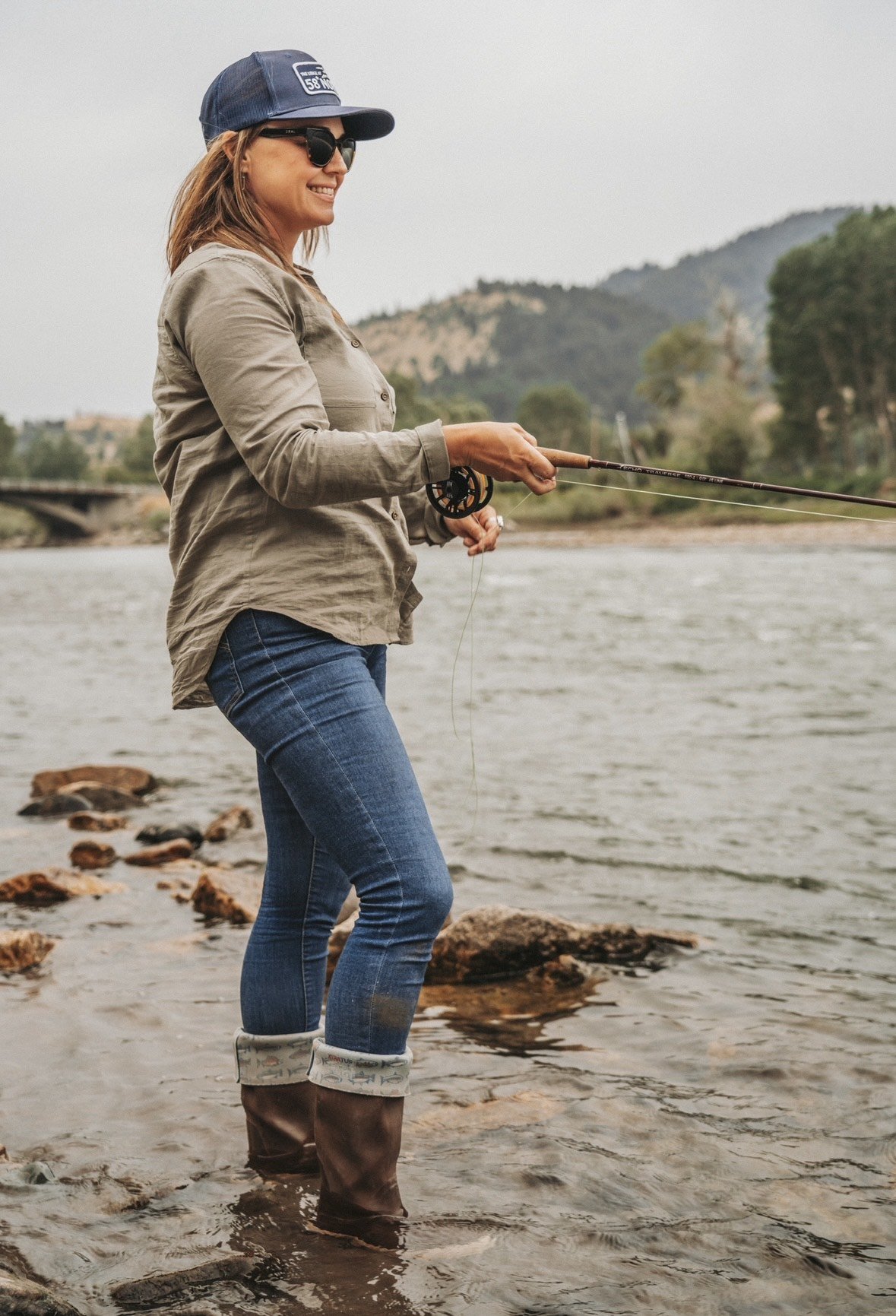
Wading Strong: Simple At Home Practices for Better Movement on the Water
Walking and wading may seem simple on the surface, but both can present a surprising number of physical challenges. This is especially true when we find ourselves moving through wild, uneven, and ungroomed terrain.
Increasing our capacity to move well as we explore fisheries and wild places is one of the best ways to keep ourselves returning to them for years to come. While simply spending time outdoors is a powerful driver of resilience, there are also small, simple practices we can integrate into daily life that carry real impact. For anglers who spend long days covering ground, as well as those newer to wading, refining the foundational skills that support walking, balance, and stability matters. Below are a few accessible ways to do exactly that, all from home.
Single Leg Balance
For yogis or martial artists, single leg balance may already feel familiar. What’s often overlooked is that walking itself is essentially a repeated sequence of single leg balancing, just performed more quickly. While wading, we’re frequently asked to balance on one leg for longer or more deliberate periods of time. Whether you’re untangling a fly from a boot lace or carefully extracting one foot from deep mud, the ability to stand well on one leg is incredibly useful.
Try: Stand on one foot for short periods throughout the day. Brush your teeth, wait for the kettle to boil, or pause while standing in line. Use a wall or stable surface for support if needed, and gradually increase the duration over time. Practice on both sides, and as you improve you can integrate gaze shifts and head movement to challenge your balance even more.
Balanced Walking
All walking involves balance, but angling often demands variations that differ from everyday gait. Crossing downed trees, stepping through boulder fields, or navigating narrow banks requires more precision and control. Regular exposure to these types of walking patterns helps build neuromuscular awareness and preparedness.
Try: Incorporate a tightrope style walk into your routine. Practice heel to toe walking forward and backward in your driveway, yard, or indoor space. Use sidewalk seams or floor tiles as visual guides if available. As a progression, balance walk along a low beam or a 2x4.
Being Barefoot
Most modern footwear limits the foot’s ability to sense and adapt to the ground beneath it. Over time, this can reduce strength, resilience, and responsiveness in the feet and ankles. Spending intentional time barefoot gives the feet an opportunity to re engage with the environment and rebuild capacity.
Try: Begin spending more time barefoot at home. If your feet are usually confined to shoes or slippers, mild soreness is normal at first. Ease in gradually and vary the surfaces you walk on, such as carpet, hardwood, or outdoor ground. For those interested in minimalist footwear, this is a helpful transition strategy.
Toe Neuromapping
We often think of fingers as independent contributors to hand function, but rarely extend that same consideration to our toes. Strong, well coordinated toes play a significant role in balance and ground connection. Improving the brain to toe connection can meaningfully enhance stability.
Try: While barefoot and either seated or standing, lift and lower just your big toe, then switch to the other foot. Next, lift and lower the smaller toes while keeping the big toe down. Alternate sides and repeat for several rounds. Patience is key, this connection builds with practice.
Vestibular Drills
Beyond muscles and joints, the vestibular system plays a central role in balance. This sensory system integrates input from the inner ear and eyes to help orient the body in space. Simple vestibular drills can support this system, and many can be done seated.
Try: Sit comfortably and extend one arm straight out in front of you with a thumbs up. Keep your eyes focused on your thumb while turning your head left and right, then up and down. Perform several repetitions in each direction. Progress by standing, then eventually practicing on one leg.
Myofascial Release for the Feet
Soft tissue health influences how well the feet sense and respond to the ground. Myofascial release can support mobility, overall tissue quality and hydration, and sensory awareness.
Try: Roll the soles of your feet using a ball. A tennis ball is a good starting point for sensitive feet, while firmer balls can be introduced over time. Cover the entire surface from the ball mounds to the heel, paying attention to the arches. Use pressure that feels sustainable and avoid pain. Roll forward and backward, as well as side to side, to explore different tissue layers.
Walking and wading well isn’t about doing anything extreme. It’s about building a foundation of balance, awareness, and adaptability that supports you every time you step into moving water or uneven ground. These small practices add up, helping you feel steadier, more confident, and more capable wherever your fishing takes you.
The Physical Feat of Mindfully Landing, Handling, and Releasing Fish
For the budding new angler, or those who tend to hit the water with guides or buddies more often than not,you may be in for a bit of a surprise when you first realize that netting your own fish can wind up being the greatest physical feat of the day.
While we’ve been fortunate in recent years to have excellent organizations like Keep Fish Wet leading the charge in safe fish handling education, implementing these best practices can come with a few unexpected asks from your physical self. Executed with ease and sometimes taken for granted, landing and releasing a fish with care often involves far more coordination, mobility, and awareness than it appears.
Below is a breakdown of some of the key physical elements involved in a solid landing, handling, and release, along with simple, practical ways to support your body off the water so you can better care for your fish on it.
Shoulder Mobility
It should go without saying that fly casting demands a fair amount of shoulder mobility. What’s often less obvious is how much shoulder flexion,arm overhead,you need when netting your own fish. This position places additional demands on the shoulder girdle, especially when paired with uneven footing or flowing water.
Maintaining well-moving shoulders is essential, particularly during the net-and-release phase.
Try: Shoulder CARs (Controlled Articular Rotations) are one of the most effective ways to build and maintain usable shoulder range of motion and control. These can be done seated, standing, tall kneeling, or in a quadruped position. A quick daily set of slow, intentional rotations goes a long way in keeping this complex joint system healthy.
Reaching
With the lift of the rod comes an even longer reach from the net-handling arm. Reaching well requires coordination between the shoulder blade, shoulder capsule, arm, and spine. It’s a whole-body task, not just an arm movement.
Keeping these systems working together supports not only fish handling, but plenty of everyday movements as well.
Try: Stack movements by practicing single-arm or two-arm reaches while seated on the floor. Sit cross-legged and reach forward, overhead, and side to side, then switch which leg is in front. Other useful positions include legs straight out, straddled, or any type of squat. Use a yoga block, bolster, or pillows under your seat as needed. Adding gentle trunk rotation can further support spinal health.
Grip Strength
And no, I’m not talking about death-gripping your fish. Please don’t.
Whether you’re using a rubber net or opting for a hands-free release, healthy hands and wrists matter. Even lightly managing a net handle or controlling slack line requires grip endurance and wrist control. When these areas aren’t up to the task, even simple actions can feel surprisingly challenging.
Try: Similar to shoulder CARs, daily wrist CARs performed slowly and intentionally can help maintain wrist mobility. Aim for three rotations in each direction. For added grip work, lightly squeeze a tennis ball while moving through the rotations.
Lower Body Mobility
One of the bigger challenges for many anglers is getting low enough to the water to safely remove a fly and release a fish,without lifting it out of the water. Limited ankle, knee, or hip mobility can make this difficult.
For many anglers, some variation of a squat is the most effective position for keeping fish submerged during release. A mobile lower body also supports checking water temperatures and navigating uneven terrain.
Try: Floor sitting is a deceptively effective way to build and maintain lower body mobility. Regularly shifting between seated positions moves the hips, knees, ankles, and pelvis through a wide range of angles. Use blankets or cushions as needed, and sit near a stable surface if you’ll need help standing back up. If floor sitting isn’t accessible, vary your seated positions in chairs or on the couch and incorporate ankle CARs throughout the day. Aim for about 30 minutes of floor time daily if possible.
Balance & Proprioception
Landing and releasing a fish often involves reaching, pivoting, squatting, and gripping,all while standing in moving water. In the excitement of the moment, it’s easy to forget that keeping your feet under you is still the foundation of the whole operation.
Stability isn’t about staying rigid; it’s about remaining steady within movement. Balance and spatial awareness are key.
Try: Start with sustained single-leg standing. As this becomes more comfortable, add movement,leg swings, arm reaches, or gentle hip hinges,to challenge your ability to re-stabilize. Use a wall or other support as needed while gradually increasing difficulty over time.
Surprisingly enough, safely handling and releasing fish may leave you with some unintentional mobility gains of your own. Keep those rod tips lifting and your squats plenty low.
And if you’re looking for motivation to invest in your movement practice off the water, becoming a more ethical, capable, and mindful angler is as good a reason as any. Your joints,and your fisheries,will thank you.