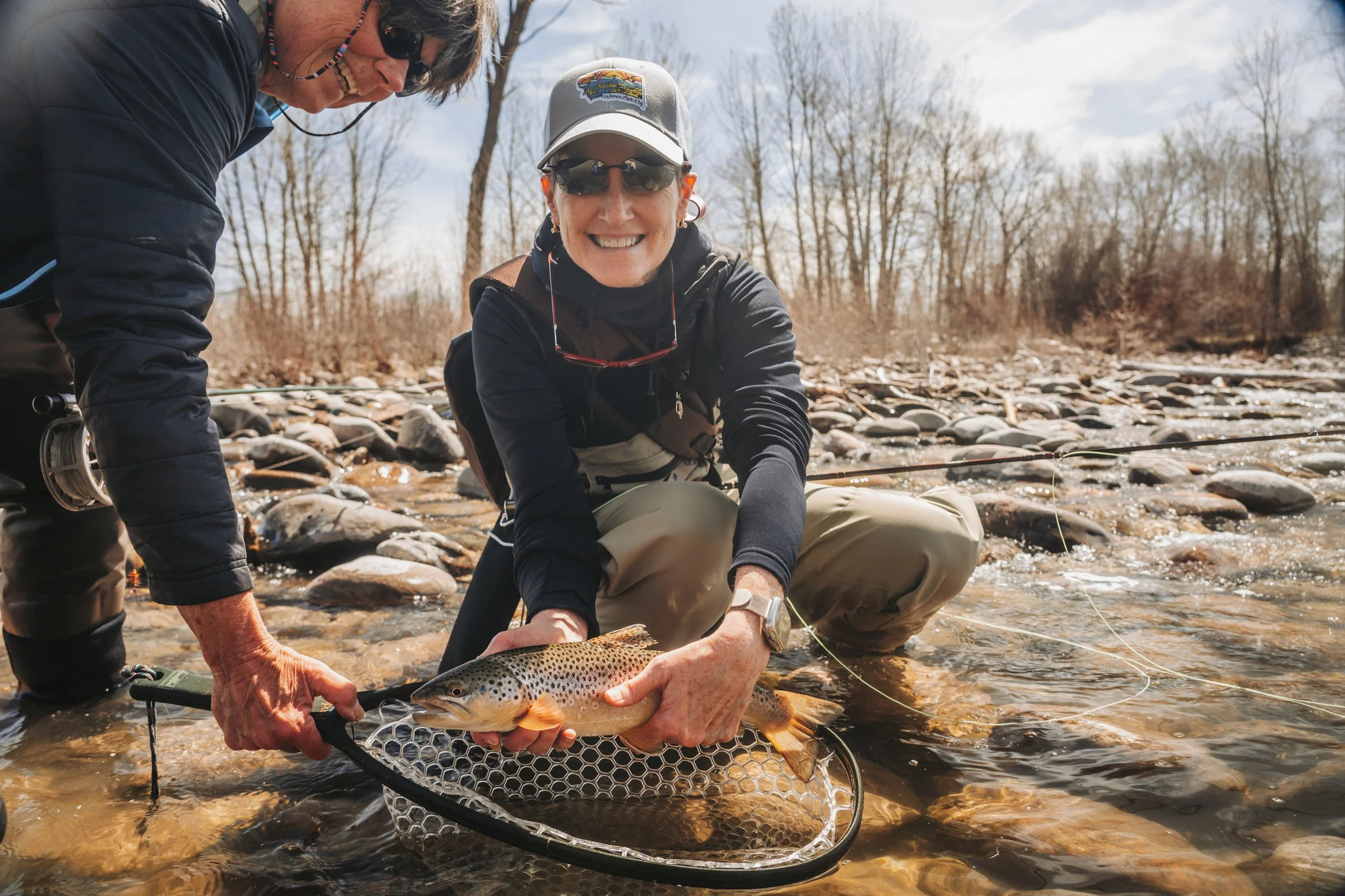
Aging Strong: How Fly Fishing Trains Stability, Strength, and Brain Health As We Age
Time on the water is more than just stunning scenery and rhythmic casts. For anglers of all ages, fly fishing can become a functional health practice that supports balance, fall resistance, coordination, and even brain health. As someone who owns and operates a fly fishing school and who also coaches functional strength and conditioning, I see firsthand how these systems overlap to help people age with strength and resilience.
Below we’ll explore how fly fishing engages the entire body and mind, why that matters as we age, and what the latest research reveals about stability, motor control, and cognitive vitality.
1. Stability, Balance, and Fall Prevention
One in three adults over age 65 experiences at least one fall per year, often resulting in injury, fear of movement, and reduced confidence. Fortunately, decades of research confirm that targeted exercise interventions can significantly reduce that risk.
A meta-analysis of 81 randomized controlled trials involving more than 13,000 older adults found that exercise reduced the rate of falls by about 23 percent and reduced the number of people who experienced at least one fall by 15 percent (Sherrington et al., 2019, British Journal of Sports Medicine). The most effective programs included functional balance, strength, and coordination training.
When you step into a river, navigate current, or move between bank and water, you are training those same systems in real time. Wading requires dynamic stability and rapid weight shifting, challenging your balance and postural reflexes in a natural environment. Carrying gear, crouching to land a fish, or getting up from a low kneel all demand strength and mobility through the hips, knees, and ankles, which is critical for fall prevention and daily independence.
The uneven, unpredictable nature of river terrain also builds “reactive balance,” similar to what researchers call perturbation-based training: exercises designed to improve your ability to recover from slips and stumbles (Mansfield et al., 2007, BMC Geriatrics). In other words, every hour you spend adjusting your footing in current is a real-world stability session.
2. Functional Strength and Mobility
Functional movement patterns such as squatting, stepping, hinging, and lifting, are essential for maintaining strength and independence with age. Studies show that both resistance and bodyweight-based strength training preserve muscle mass, bone density, and overall mobility (Martone et al., 2021, Frontiers in Medicine).
Fly fishing engages many of these same patterns. Wading activates the hips and core for stabilization. Casting strengthens the shoulder girdle, spine, and forearm muscles through controlled, repetitive movement. Carrying equipment, walking uneven trails, or climbing over riverbanks reinforce grip, leg strength, and endurance, all of which are crucial for functional longevity.
Every time you lower to the ground and then rise back to your feet for any number of reasons, you’re performing what those of us in the fitness professional refer to as a “ground-to-stand transfer.” Maintaining this ability is strongly correlated with reduced mortality risk in older adults, as shown in longitudinal studies examining the link between mobility and lifespan.
3. Fine Motor Skills and Sensory Integration
Fly fishing demands fine motor precision, including threading flies, tying knots, and managing line. These actions require intricate coordination between the hands, eyes, and brain, engaging both motor and sensory pathways.
Research consistently shows that regular fine motor activity improves neural connectivity and preserves manual dexterity with age (Santos et al., 2018, Frontiers in Aging Neuroscience). The hands are an extension of the brain, and activities that challenge coordination and tactile awareness help maintain cognitive processing speed and proprioception(the body’s ability to sense its position in space).
Practicing these skills in varied outdoor conditions further enhances sensory integration. You’re constantly adjusting to changes in light, texture, and temperature, which trains your nervous system to remain adaptive and responsive.
4. Brain Health, Cognition, and “Blue Space”
Fly fishing isn’t just physical training, it’s a cognitive workout. The act of reading water, selecting flies, managing line tension, and adjusting strategy engages problem-solving, working memory, and sustained attention.
A growing body of neuroscience research supports that learning complex motor skills helps preserve cognitive function and delay neurodegenerative changes. Physical activity combined with skill learning promotes neuroplasticity and hippocampal volume, both linked to memory and cognitive resilience (Kramer & Colcombe, 2018, Annual Review of Psychology).
Additionally, research on “blue space” environments: natural settings near water, shows strong associations with lower stress levels, improved mood, and enhanced brain connectivity related to emotional regulation (White et al., 2021, Scientific Reports). In essence, time on the water nourishes both the nervous system and the psyche.
Why It All Matters
When viewed through the lens of functional health, fly fishing is a complete mind-body practice. It trains balance, mobility, sensory awareness, and focus while offering connection, stress relief, and time in nature. These are precisely the factors associated with healthy longevity in the world’s longest-living populations.
Through my work with Wade Well, I help anglers integrate these elements intentionally so they can continue doing what they love for years to come. The physical and cognitive systems that keep you safe and strong on the river are the same ones that sustain independence and vitality in daily life.
If you’re ready to move better, fish better, and age stronger, learn more or join my newsletter at www.lindsaykocka.com for upcoming programs, articles, and resources designed to help you stay active and connected to the outdoors for life.
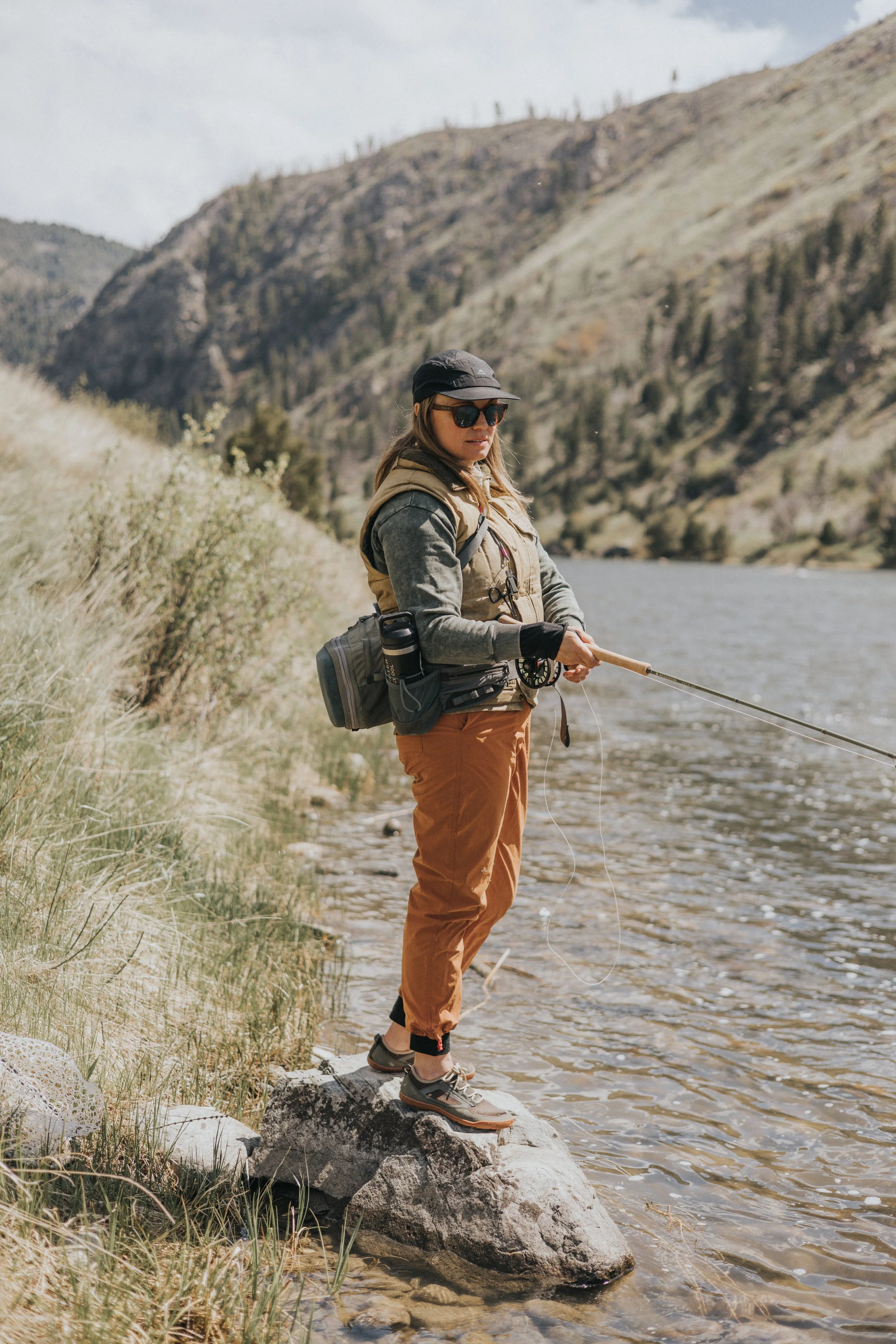
What My Oura Ring Confirmed About Fly Fishing, Nervous System Health, and Recovery
Fly fishing supports nervous system health in both active and restorative ways. Here’s how my Oura Ring confirmed it after a day on the Madison River.
As someone who teaches people to reconnect to their bodies through fly fishing, movement, interoception, and nervous-system awareness, I’ve built my career around helping others feel their way back into themselves. I’ve spent years practicing and coaching people in developing a more refined sense of internal cues: breath rhythm, heart-rate shifts, muscular tension, emotional charge, and the ability to recognise when we’re regulated, dysregulated, or stuck in autopilot.
It’s affirming when a health wearable backs up what my lived experience already signals, and the added confirmation helps to better affix strong lifestyle habits.
Last weekend, I floated and fly-fished the lower Madison River. It wasn’t a numbers day and was exceptionally slow from a catching standpoint, but it was rich in another way: long stretches of sleepy current, sandhill cranes calling in the distance, a bull moose bedded down in the willows, bald eagles flying upriver at eye level, late-season sunlight hitting the hills. It was a sensory environment that allowed my system to down-shift.
That night, my Oura ring metrics reflected exactly that. Increased heart-rate variability (HRV), lower resting heart-rate, high Recovery Index, and a Readiness Score that suggested I had shifted into a deeply restorative state. The data aligned with what my body was already telling me: I had spent the day regulated and grounded.
The gap between lived experience and internal awareness
A lot of people have lost touch with these signals while we exist in a pace and environment that rarely lets the nervous system down-shift from sympathetic drive. Chronic overstimulation dulls interoceptive awareness, making it hard to distinguish “tired vs. wired,” “stressed vs. focused,” or “present vs. braced.” That’s why health wearables can be powerful tools when used intentionally: not to replace your body’s compass, but to help rebuild trust in it.
Why I appreciate Oura’s approach
As a strength, mobility, and functional movement coach, I understand the appeal of metrics around activity levels and movement output. But as a restorative yoga and meditation teacher who works with breath, vagal toning, and recovery, I especially appreciate that Oura prioritizes sleep, HRV, nervous-system recovery, and signals of restorative states. I also love that it lets me track these states without staring at another glowing screen. The ring design lets me disconnect and still gather useful insight.
Fly fishing as both active stimulus and restorative down-shift
What I appreciate most about fly fishing is its versatility. Not every day on the water looks like a quiet float watching wildlife. Some days I’m wading against strong current, hiking aggressively to reach un-pressured water, rapidly floating through whitewater, and staying mentally locked into fast-paced problem-solving. Those days are physically demanding, stress-inducing, and metabolically engaging in a way that supports strength, cardiovascular output, and resilience under challenge.
Other days look more like the one I experienced this weekend: slower, quieter, more observational, with long pauses between casts and an expanded sensory field. That shift allows the nervous system to move into recovery and integration mode.
One of the values of fly fishing is that it meets us where we are, and where we’d like to be, whether in a state of activation and engagement or decompression and regulation.
Fly fishing as a regulated nervous system practice
When I lead retreats or guide fly-fishing experiences, I’m not just focused on casting accuracy or fish count. I’m helping people re-enter themselves. The act of wading, observing, casting, pausing, tracking drifts, waiting - it all encourages down-regulation. Slow-water days like the one I experienced this weekend are often the most restorative because they shift the objective from performance to presence.
My Oura data didn’t convince me that I was recovered. It simply confirmed what my body had already registered: I had spent the day in parasympathetic dominance while recalibrating my breath and heart rate while widening my sensory field.
Rebuilding trust in your own signals
Fly fishing, when approached as more than a sport, becomes a moving practice in interoception. Wearables like Oura can serve as a bridge, helping people see in data what they may not yet feel in their bodies. Over time, that external validation can become internal confidence.
How I teach this through the Wade Well Method
The Wade Well Method is built around the idea that fly fishing is more than a sport, it’s a full-spectrum nervous system practice. Some sessions are high-output and performance-driven. Others are intentionally slow to promote recalibration, body awareness, and recovery. My coaching and guided experiences help people understand how to navigate both ends of this spectrum with intention and physiological literacy.
I offer this work through:
Fly fishing group experiences and retreats that blend time on the water with mobility, breath, and nervous-system reset.
Intensive workshops that explore both skill development and internal regulation.
1:1 movement and recovery coaching, where I integrate strength training, mobility, Functional Range Conditioning (FRC), breath mechanics, and recovery practices to help clients rebuild trust in their bodies and optimize performance and longterm health.
If you’re curious about how fly-fishing can support nervous-system health, or want to reconnect movement, recovery, and nature in a more intentional way, I invite you to explore what’s possible through the Wade Well Method, retreats, and collaborations.
REFERENCES / FURTHER READING
“Fly-Fishing and the Brain” – Harvard Medical School: A summary of research showing reduced stress and improved sleep in fly-fishing retreats. Harvard Medical School
“Recreational Fishing, Health and Well-being” – European review of fishing’s associations with psychological stress and sleep. PMC
“The Effect of Exposure to the Natural Environment on Stress Reduction” – Meta-analysis of green space/nature exposure reducing cortisol and improving mood. PMC+1
“Forest Walking Affects Autonomic Nervous Activity” – Large sample study showing HRV shifts in forest vs urban environments. PMC
“Viewing Nature Scenes Positively Affects Recovery of Autonomic Function Following Acute-Mental Stress” – Experimental study with HRV recovery differences. PMC

Fly Fishing and the Blue Zones: How Time on the Water Organically Builds Health and Longevity
Fly fishing offers far more than time on the water, it’s a lifestyle that mirrors the habits found in the world’s Blue Zones. Through mindful movement, connection, and time in nature, anglers can cultivate strength, balance, and longevity. Explore how fly fishing supports whole-person wellness, and how Wade Well programs help bring those benefits to life.
What if one joyful outdoor practice could embody many of the habits that define the world’s healthiest, longest-lived people?
Research on the Blue Zones, regions around the world where people routinely live well into their 90s and beyond, suggests that longevity isn’t about extremes, it’s about lifestyle. Dan Buettner’s work across Okinawa, Sardinia, Nicoya, Ikaria, and Loma Linda shows that people who live the longest share a few key commonalities: they move naturally throughout their day, maintain strong social connections, spend ample time outdoors, cultivate purpose, manage stress, and engage in mindful, meaningful routines.
Fly fishing, when embraced as a regular practice, naturally checks many of those boxes. It’s not only a sport or past time, but a way of living. One that blends natural movement, mindfulness, connection, purpose, and time in nature.
Through my work as a fly fishing instructor and health and wellness coach and trainer, I’ve seen how a consistent practice on the water can serve as a powerful path towards greater physical vitality, mental clarity, and social well-being. And through my women’s fly fishing schools and retreats, I aim to make these benefits accessible, welcoming, and sustainable, helping more people discover the health potential that lies within this mindful outdoor lifestyle.
Blue Zone Habits, and How Fly Fishing Naturally Supports Them
1. Move Naturally
People in Blue Zones don’t necessarily “work out”, but they do move regularly and mindfully. Much of their physical activity comes through walking, gardening, and tending to daily life. Fly fishing reflects this same philosophy of natural movement: casting engages the shoulders and core, wading improves balance and leg strength, and time spent walking the riverbank supports cardiovascular health and coordination. Every hour on the water becomes full body movement with purpose.
2. Manage Stress Through Mindfulness
In Blue Zone communities, stress is released through rituals like prayer, meditation, rest, or social time. Fly fishing invites this same rhythm. The act of casting, the sound of water, and the quiet focus of observing nature all serve as active mindfulness, of which many consider to be deeply spiritual. Studies have shown that fishing can lower cortisol (the body’s primary stress hormone), improve mood, and support sleep, all markers of reduced chronic stress and inflammation.
3. Cultivate Social Wellness and Belonging
Connection is a cornerstone of longevity. People who live longer and happier lives belong to close-knit, supportive communities. Fly fishing, especially when practiced with others, fosters this same sense of belonging. In my women’s schools and retreats, we intentionally build spaces of connection, where women can learn together, share stories, support one another, and cultivate long-term relationships. Many participants continue to fish together long after the retreat ends, maintaining the social bonds that underpin true wellness. And of course the fly fishing culture itself is deeply rooted in those relationships that we forge.
4. Nurture Purpose and Mastery
Having a sense of purpose, what the Okinawans call ikigai, is one of the strongest predictors of well-being and longevity. Fly fishing offers endless opportunities for mastery and growth. Learning to read water, tie knots, identify insects, and understand ecosystems connects us to a greater sense of purpose and curiosity. For many, it also reignites confidence and agency, reminding them of their capability, adaptability, and strength. The fly fishing community is also very well known for its many mission oriented organizations, of which there are myriad opportunities to share knowledge, engage in restoration work, volunteer time, and give back.
5. Spend Time Outdoors
Every Blue Zone region has a deep relationship with nature. Regular time outdoors improves mood, reduces anxiety, restores cognitive function, and strengthens immune health. Fly fishing places us directly in that environment, immersed in sunlight, fresh air, and the sensory richness of rivers and lakes. It’s movement, meditation, and nature therapy all in one.
6. Eat Mindfully and Locally
Rather than focusing on dietary rules, Blue Zone living emphasizes mindfulness and connection to food, eating slowly, stopping before fullness, and sourcing food locally whenever possible. Fly anglers intuitively understand this rhythm. Our time on the water connects us to natural cycles, seasonal change, and the ecosystems that sustain life. Sharing meals after a day of fishing often reflects this same ethos: simple, local, and intentional nourishment that’s frequently shared while in community.
A Holistic Practice for Modern Well-Being
Fly fishing has been shown to improve coordination, balance, and mobility. Beyond the physical, it strengthens attention, pattern recognition, and problem-solving, skills that keep the brain sharp and engaged over time. Just as importantly, it reconnects us with what it means to live in rhythm with nature and community.
When integrated as part of a lifestyle, fly fishing becomes more than recreation, it becomes restoration. It’s a lifestyle that naturally incorporates physical movement, mindfulness, social connection, purpose, and time outdoors. The very elements that define long, healthy lives in the world’s Blue Zones.
The Wade Well Approach
At Wade Well, my fly fishing schools and retreats are designed with this holistic framework in mind. Each program blends skill-building with intentional movement, mindfulness, and community.
While many of my signature programs focus on creating supportive spaces for women, the broader philosophy behind the Wade Well Method applies to everyone: using fly fishing as a pathway to strength, balance, connection, and long-term wellness, on and off the water.
References and Further Reading
Buettner, D. (2012). The Blue Zones: Lessons for Living Longer From the People Who've Lived the Longest. National Geographic.
Blue Zones Research: bluezones.com
Healthline: How the Blue Zone Lifestyle Promotes Longevity
UCLA Health: Eight Lessons from the Blue Zones
Wild Water Fly Fishing: The Benefits of Fly Fishing
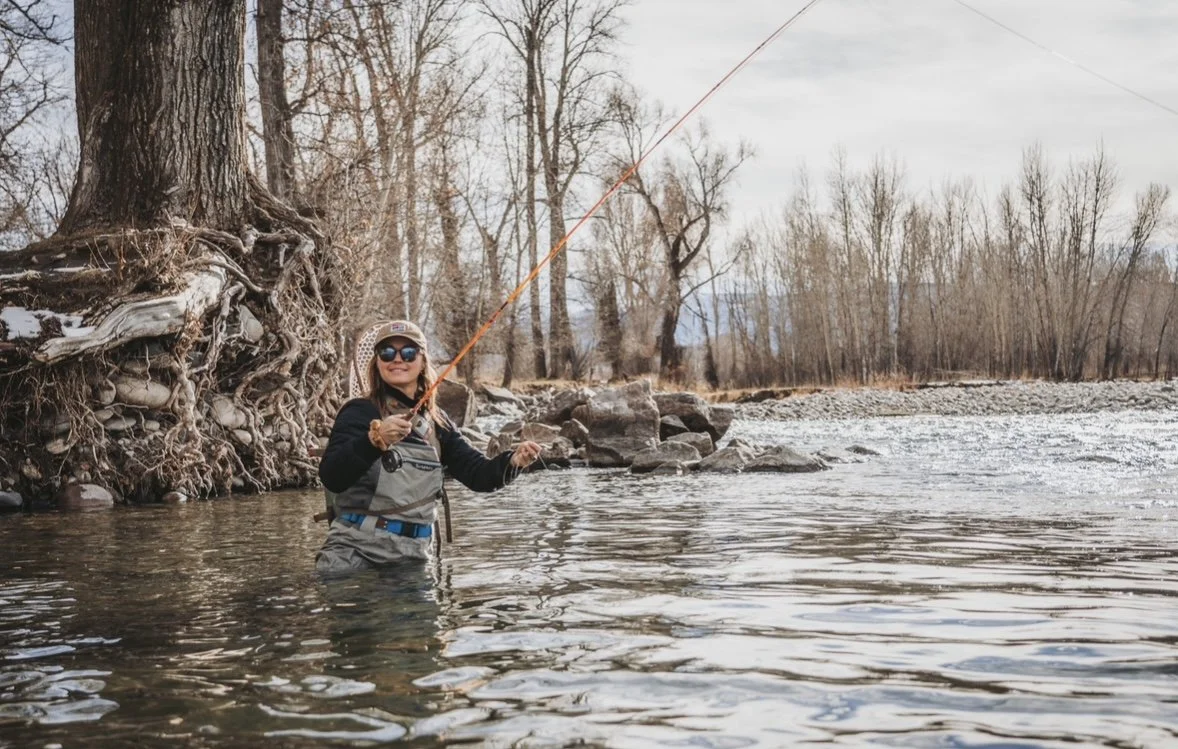
It’s Not Your Boots, It’s Your Brain: How Hydration Helps To Keep Anglers Upright
Okay maybe your boots are part of the equation as well, but if you’ve ever spent a long day wading a river and noticed you’re feeling a little foggy, unsteady, or slow to react by mid-afternoon, there’s something else that’s probably at play. And while these symptoms could certainly be attributed to basic fatigue, lack of proper hydration may be affecting you more than you may realize.
As anglers, we think a lot about flies, casting, and where fish hold. But one of the simplest ways to fish better, stay safer, and feel more energized, is often the last thing we’re thinking about: drinking enough water.
When I’m coaching anglers through balance drills, reaction training, and functional movement work with Wade Well, hydration always comes up. When we’re on the water we’re rarely just standing still, and instead are frequently shifting foot positions, reaching, turning, and reacting to an environment that’s dynamic and unpredictable. All of which require sharp reflexes, strong sensory awareness, and solid coordination, all of which start to break down when we’re underhydrated.
What actually happens when we’re dehydrated
Even mild dehydration (we’re talking a 1-2% drop in body weight from fluid loss) can impact:
Balance and proprioception (your ability to know where your body is in space)
Reaction time (how quickly you correct a misstep or adjust to a moving rock)
Hand-eye coordination (pretty important when you’re tying knots or making a precision cast)
Focus and attention (critical when you’re navigating uneven terrain or fast current)
Research backs it up. Studies show that even slight fluid loss slows down your nervous system’s response time and can throw off your spatial awareness.
Masento et al., 2014 found that mild dehydration impairs attention and motor coordination.
Zhang et al., 2019 demonstrated slower reaction times and reduced accuracy in dehydrated athletes.
In other words, if you’re even a little low on water, your brain-to-body connection starts to lag, which is the very last thing you want when you’re wading your way across a slick cobble bank or stepping into a deep run.
What this looks like on the water
You might notice subtle things first: your casting feels clumsier or your foot slips more often than usual. You might feel a little “off” or sluggish but can’t quite put your finger on why.
That’s your nervous system trying to do its job with a bit less fuel. Water is essential for nerve conduction, blood flow, and sensory processing - all of the stuff that helps you stay upright and coordinated.
And the fix? It’s simple: drink more water and prioritize electrolytes, earlier and more often.
Why anglers are especially prone to dehydration
Fly fishing sets the stage for dehydration without us realizing it:
We’re often in the sun and wind for hours.
We’re oftentimes moving just enough to sweat, but not enough to feel noticeably thirsty.
We don’t want to carry bulky bottles or break our rhythm to sip.
But that slow trickle of fluid loss adds up, and by the time thirst kicks in, we’re already behind.
Older anglers, especially, may feel the effects more sharply because hydration cues and fluid balance shift with age. But honestly, I see it across all ages. When I lead fly fishing school, retreats, and private lessons, I can often tell by mid-day who’s hydrated and who’s not, and it shows up in posture, movement, energy, and focus.
Wade Well hydration habits for confident wading
Here’s what I teach my students and clients to keep their bodies (and brains) fueled all day:
Pre-hydrate before you fish. Don’t wait until you’re at the river, drink a full glass of water before you leave.
Make it easy. Use a hydration bladder or bottle you can reach without unpacking your gear. The best system is the one you’ll actually use.
Sip, don’t chug. A few sips every 20–30 minutes keeps your nervous system steady.
Add electrolytes if you’re fishing long days in heat, wind, or elevation. Water alone oftentimes isn’t enough.
Pay attention to the signals. If you’re feeling foggy, lightheaded, clumsy, or irritable, you’re probably overdue for water.
The payoff: more confidence, fewer slips, sharper fishing
Hydration won’t magically overhaul your entire biology, and yes, there are many other components that influence our movement capacity while on the water, but it will support the neurophysiology that helps to keeps you upright, steady, and sharp. It’s an easy, free, and often overlooked piece of basic performance.
And when you show up hydrated, you move better, fish longer, and feel stronger, all the things that help you get the most from your time outside.
References:
Masento NA et al., Appetite (2014) – Mild dehydration impairs attention and motor coordination.
Zhang N et al., Eur J Nutr (2019) – Effects of dehydration and rehydration on cognitive performance and reaction time.
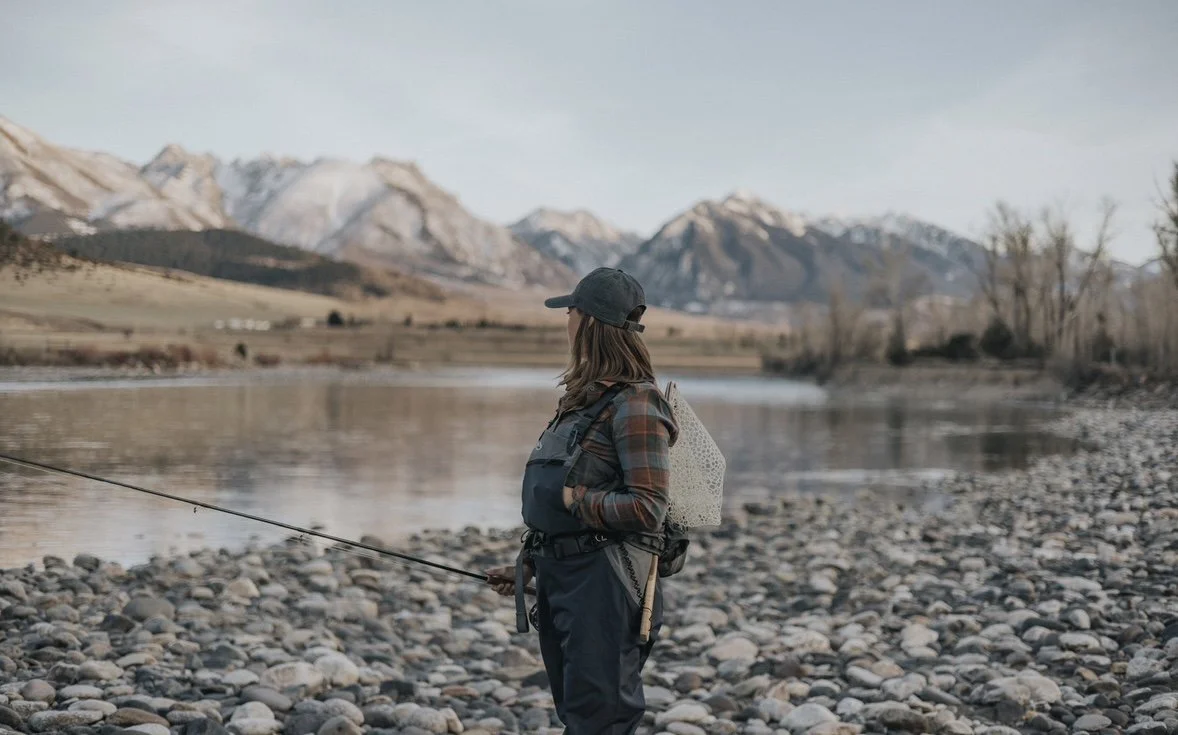
Why Over-gripping Your Fly Rod Leads to Pain - and How Science and Legendary Instructors Agree on a Softer Touch
It’s one of the simplest yet most overlooked elements of fly casting: your grip.
As a functional mobility coach who specializes in working with fly anglers, I see it constantly: hand, wrist, and elbow pain that traces back to overgripping the fly rod. Whether it’s a seasoned angler battling tennis elbow or a beginner whose forearm aches after a single day on the water, the root cause is often the same: too much tension in the hand.
The irony? Some of the greatest fly casting instructors in history have been telling us for decades that the rod should be cradled, not clamped.
“Grip the rod as though you were holding a small bird. Firmly enough so it won’t fly away, but gently enough so you don’t crush it.”
- Joan Wulff, often called the First Lady of Fly Fishing
This simple piece of wisdom is backed by biomechanics: when we overgrip, we recruit excess muscles and tendons in the hand, wrist, and forearm, increasing strain on soft tissue. Over time, this repetitive load can contribute to overuse injuries like lateral epicondylitis (tennis elbow), medial epicondylitis (golfer’s elbow), and chronic wrist pain.
Legendary Voices on the Art of the Light Grip
The late Lefty Kreh reminded anglers that “power comes from technique, not from strength.” A tight grip not only fails to add power but also robs the cast of its fluidity and efficiency.
Similarly, Mel Krieger described the fly rod as something to “hold as though you’re shaking hands with a friend. Friendly, but not crushing.” This image underscores what modern science confirms: a relaxed, consistent grip keeps the wrist supple and the rod tip on track, producing smoother loops and less strain on the body.
What the Science Tells Us
Modern research continues to affirm what fly fishing’s legends have always taught. Sustained high grip force, especially combined with repetitive wrist extension, is strongly associated with tendinopathies and nerve compression syndromes.
A 2021 systematic review in the Journal of Hand Therapy found that prolonged grip force and repetitive motion significantly increase the risk of chronic overuse injuries.
Reference: Coombs & Carty, 2021A 2020 study in Clinical Biomechanics showed that lighter grip strategies reduce peak forces at the wrist and elbow, lowering cumulative stress and delaying fatigue.
Reference: Boland & Weir, 2020
And beyond pain, grip tension impacts performance. Research in proprioception shows that over-gripping reduces joint position awareness in the wrist. In other words, when you overgrip, the harder it is for your body to sense and execute precise movements. While there are some instances where an increased grip is needed based upon rod weight and conditions, too much tension tends to have a negative impact.
Functional Mobility Meets Casting Mechanics
In my work with anglers, I integrate functional movement and mobility strategies into casting practice to retrain the body before injuries occur. A few of my go-to methods include:
Grip awareness drills: alternating between firm and soft rod holds so anglers can feel the difference.
Extensor training: using elastic bands to strengthen finger extensors, balancing the strong flexors that close the grip.
Shoulder and elbow stability work: reducing reliance on the hand alone by engaging larger, more resilient muscle groups.
I remind students that your cast just doesn’t begin in your fingers. It begins in the foundation of your feet, the orientation of your hips and trunk, and the transferrance of energy through your arm to the rod tip. A relaxed grip allows that energy to flow smoothly, rather than bottlenecking within the forearm.
Why This Matters for Your Fishing Future
Loosening your grip isn’t just about tighter loops and a greater connection to your cast. It’s about protecting your hands, wrists, elbows, and even shoulders, so you can keep fishing for decades.
Over-gripping limits circulation, creates tension hot-spots, and forces your body into compensation patterns that can quickly accelerate wear and tear. Nearly every angler I’ve worked with on injury recovery ends up retraining their grip, and when I teach new anglers fly casting basics, this is exactly where we begin. That small adjustment often brings big relief, greater endurance, and considerable casting performance gains.
The best part? You don’t have to choose between science and tradition. The wisdom of Wulff, Kreh, and Krieger aligns perfectly with what modern research shows: a lighter grip is both biomechanically efficient and the key to long-term joint health.
From Ming Dynasty Tools To Modern Day Fly Fishing: The Ultimate Hand Health Exercise For Greater Longevity
Discover how a centuries-old hand exercise, adapted into “Baoding Bobber Mobility” can improve casting endurance, grip strength, and wrist resilience for fly anglers. Learn how this simple, evidence-backed practice prevents hand fatigue, protects joints, and keeps you strong on the water season after season.
As fly anglers, whether we’re navigating braided freshwater or wind-whipped saltwater, we repeatedly rely on hand, wrist, and grip strength. It impacts our casting, rowing, skiff poling, knot and fly tying, and netting, amongst many other skill-based needs. Within the Wade Well Method I’ve customized a technique that I’ve playfully coined “Bobber Mobility” that include specialized fly fishing hand exercises that use OROS strike indicators as simple tools. Across the past 14 years that I’ve spent as a professional mobility coach and prehab specialist, I’ve oftentimes found that equipment free exercises or those that make use of those items that we already have on hand frequently inspires greater integration and consistency for my students. Enter: bobbers.
For this technique, you’ll use two standard indicators (I again prefer OROS because A. they’re my bobber of choice as an angler, and B. they most closely resemble the consistency of many actual therapy balls). This functional mobility practice mimicks Baoding balls, designed to enhance dexterity, circulation, and joint health for fly fishing. First a look at the history and evidence, followed by a full “How To” section to help you get started.
Historical Roots and Cultural Context of Baoding Balls
Baoding balls originated in Hebei province, China, during the Ming dynasty. Initially forged from iron and called “iron balls,” they were used to exercise the hands, building from earlier practices of rolling walnuts. As craftsmanship advanced, hollow metal spheres with inner chimes were developed, later evolving into versions made from jade, marble, and cloisonné-decorated metal. Among both ‘commoners’ and elitest classes, Baoding balls became treasured. Qianlong, a Qing dynasty emperor, credited them with contributing to his longevity.
Today their influence extends across cultures. In occupational therapy within many East Asian contexts, and increasingly found in Western rehabilitative practices, Baoding balls are valued for enhancing finger dexterity, intrinsic hand muscle strength, wrist stability, and mindful attention. They remain a simple but effective tool in promoting tactile proficiency and calming focus.
A recent EMG study compared several hand exercises, including Baoding-ball rotation, and found that while finger abduction exercises produced higher intrinsic muscle activation, rotation movements still meaningfully engage fine motor muscles. This underscores that a Baoding-style movement practice can be a valid component of hand therapy, rehabilitation, prehabilitation, and strength routines for fly anglers.
Why It Matters for Anglers
Casting endurance & control: Better finger and intrinsic hand strength and stability supports sustained technique, helping to reduce hand fatigue while fly fishing.
Rowing & poling: Strong, stable, and mobile wrists help manage oars and push-poles under variable load.
Knot/Fly tying & netting: Enhanced precision and reduced fatigue in fast-finger and fine tune tasks.
Joint protection: Maintains flexibility to prevent stiffness from repetitive strain, increasing overall health wrist health for fly anglers.
Evidence Behind the Benefits
Improved Hand Function in Arthritis/Rehab
Practices like Baoding-ball rotation have been shown to enhance grip strength, flexibility, and hand function in those with arthritis and post-surgical recovery.Targeted Muscle Activation
EMG research comparing Baoding-style rotation shows high activation of intrinsic hand muscles, vital for fine motor control and durability.Reduced Hand Pain & Improved Dexterity
Reviews indicate these tools can alleviate arthritis discomfort, carpal tunnel, and tendonitis through increased circulation and balanced muscle engagement.
How to Practice Baoding Bobber Mobility
1. What You’ll Need
Two OROS indicators. Size large or extra large is preferred, but you can experiment with smaller sizes, too.
2. Technique
Place two bobbers in one palm.
Rotate them clockwise around each other, first slowly, then gradually increase speed.
Reverse direction after ~1 minute. Great for your fly fishing hand and wrist mobility + boosts brain health via the coordination challenge.
3. Routine Timeline
Beginners: 2-3 minutes per hand daily.
Intermediate Progression: 5 minutes per hand, 2-3 times weekly.
4. Tips for Best Results
Keep wrists neutral and fingers engaged. Avoid a rigid and overally tightened grip. Think smooth movement and fluidity.
Move slowly before increasing speed to ensure controlled stabilization.
Integrate before/after rowing, casting, or poling sessions.
Include “rest days” or much lighter sessions during high fishing volume periods. Remember, a little goes a long way. Overtraining can also lead to injury.
When to Do It
Morning or evening: as part of your warm-up or recovery routine.
While waiting: whether its on the water, at the boat ramp, while standing in line at the post office, binging your favorite YouTube channel, or while enjoying your morning cup of coffee.
Post‑fishing wind down: helps flush inflammation and primes joints for rest, recovery, and rehydration.
Pulling it All Together
Integrate Baoding Bobber Mobility into your routine:
Baseline: Start at 2 min per hand, daily.
After 2-4 weeks most can increase volume to 5 min/hand, 2-3x weekly.
Track hand feel during casting, rowing, or tying, and look for gains in endurance, reduced redness or stiffness, especially in colder conditions.
References & Further Reading
Rotational exercises improve hand grip and flexibility in arthritis/rehab
EMG data shows high intrinsic hand muscle activation from ball rotation
Baoding-ball use linked to reduced hand pain, better dexterity
For fly anglers, especially those who guide, row, frequently cast and regularly tie flies, Baoding Bobber Mobility offers a simple, evidence-based technique to help keep hands strong, agile, and resilient, helping you to stay nimble long-term. Try it daily, build steadily, and watch how your hands respond over seasons, for a lifetime on the water.
Bonus FAQ: Hand & Wrist Health for Fly Anglers
Q: How can I prevent wrist pain when fly fishing?
A: Incorporating wrist mobility exercises for anglers before and after your time on the water helps reduce stiffness and strain. Gentle stretches, grip drills, and tools like Baoding balls can keep your hands and wrists healthy and pain-free.
Q: What are the best exercises for fly fishing grip strength?
A: Simple tools like stress balls, grip trainers, or fly fishing hand exercises using Baoding balls are excellent. Pairing grip strength work with mobility drills ensures you’re not just strong, but also resilient for long casting sessions.
Q: Do fly anglers really need hand mobility exercises?
A: Yes! Many casting and knot-tying motions are repetitive. Without hand and wrist mobility drills, anglers risk overuse injuries. Even a few minutes of focused practice can improve casting efficiency and comfort.
Q: Can hand fatigue affect knot tying and casting?
A: Definitely. Hand fatigue reduces dexterity and makes tying knots like the clinch or surgeon’s knot more frustrating. Practicing joint health for fly fishing routines improves endurance so you stay sharp all day.
Q: Are these hand exercises useful beyond fly fishing?
A: Absolutely. These same wrist mobility and grip strength drills support hiking, paddling, rowing, and even everyday activities like typing or carrying gear. They’re a small habit with a big payoff.
Disclaimer: This is not medical advice. The content on this site is not intended to be a substitute for professional medical advice, diagnosis, or treatment. Always seek the advice of your qualified healthcare provider with any questions you may have regarding a medical condition or a new healthcare routine.
5 Science-Backed Mobility & Strength Tips for Fly Anglers to Fish for Life

Demonstration of the Tri-Pod Vault over a downed tree. Image captured by Gloria Goni for The Flyfish Journal.
As fly anglers, we thrive on moving through rivers, scrambling over rocks, and wading into current. But those same dynamic movements that bring us so much joy also ask a lot from our bodies - balance, grip strength, full body mobility, and resilient feet that can handle long days in and out of the water.
Beyond perfecting your cast, caring for your body is one of the best long-term investments you can make in your angling life.
Drawing from my background as a Functional Range Conditioning Mobility Specialist, MovNat Strength and Movement coach, and Yoga Medicine Yoga Educator, here are five science-supported habits I recommend for every fly angler who wants to stay active, capable, and injury-resistant for decades to come.
1) Practice Daily Floor Sitting & Rising
Why it matters:
Many of us spend hours in chairs each day, and that sedentary pattern can quietly steal hip mobility, leg strength, and overall full body control over time. The ability to get up and down from the floor is strongly linked to longevity and fall prevention as we age (de Brito et al., 2012).
How to start:
Spend a few minutes each day sitting on the floor in cross-legged, kneeling, or 90/90 hip positions.
Change positions often to explore new ranges of motion.
Practice standing up without using your hands, a simple daily “mobility check-in.”
Angler’s benefit: Stronger, more mobile hips and knees make it easier to climb banks, step into boats, and move confidently on uneven terrain.
2) Foot Health: Build Strength from the Ground Up
Why it matters:
Your feet are the foundation of balance and power in casting and wading, and they support us in everything that you do day in and day out . Decades of restrictive footwear can weaken the intrinsic foot muscles, leading to chronic pain, dysfunction, and reduced stability and mobility.
Evidence shows that spending time barefoot and training foot strength improves proprioception and balance (Hashimoto & Sakuraba, 2014).
How to start:
Spend time barefoot at home or on soft natural surfaces. Even if you can’t bear weight on bare feet spending time seated with your feet freely able to move is helpful.
Choose natural footwear (wide toe box, flexible sole) when possible. Some of my favorite brands include Astral’s(also my wet wading go-to’s), Vivobarefoot, and Altra’s(a nice transitional choice with options that have more cushioning if you prefer).
Add daily foot strength exercises: toe spreads, doming, calf raises, and rolling out your arches with a ball. Be sure to refer to my social media and YouTube channels for free tutorials and classes.
Angler’s benefit: Better foot strength reduces fatigue, helps you react to slippery riverbeds, and supports your entire body mechanics and postural balance from the ground up.
3) Rucking: Simple, Accessible Strength & Endurance Training
Why it matters:
Rucking, aka walking with a loaded backpack, blends cardio, strength, and functional movement. It’s an easy way to add resistance training to your routine without the need for a gym and it also gets your outdoors walking, which is a prerequisite for wading.
Research shows weighted walking increases lower-body strength and improves bone density in weight-bearing regions (Pereira et al., 2020).
How to start:
Start with a weight equal to 10-15% of your body weight in a secure pack. You can invest in a GoRuck pack or just load up any backpack that you already own.
Walk on varied terrain for 20-40 minutes 2-3x per week. Also note that rucking on smooth terrain(sidewalks or groomed trails) is beneficial as well, and a smart point of entry for many.
Increase weight, distance, and frequency gradually.
Angler’s benefit: Builds the strength and endurance needed for hikes to your favorite water and your overall ability to walk, wade, and maintain full body mobility.
4) Train Grip Strength, A Key Longevity Indicator
Why it matters:
Grip strength isn’t just about holding your rod. It’s a validated biomarker for overall health and longevity (Bohannon, 2019).
How to start:
Use simple tools: grip trainers, balls(or your indicators!), light weights, or a rolled towel.
Hang from a pull-up bar(aka dead hang) to build additional endurance and shoulder health.
Mix static holds (squeeze and hold) with dynamic reps (open and close).
Angler’s benefit: Better rod control, longer casting days, reduced risk of overuse injuries in the hands and forearms, and overall strength and ability to navigate the outdoors.
5) Strength Train for Bone Density & Resilience
Why it matters:
Strength training helps slow age-related muscle loss (sarcopenia) and maintains bone density, both critical for staying active on the water (Wolff et al., 2020).
How to start:
Include compound movements: squats, lunges, rows, and presses.
Use dumbbells, kettlebells, and/or resistance bands. Remember that bodyweight strength training is a required entry point and incredibly benefical.
Aim for 2-3 sessions per week, focusing on quality over quantity. Even just 10 minutes of strength training a few time a week will have a positive impact long-term. Consistency is key, and don’t forget that rucking counts as strength training, too.
Angler’s benefit: Stronger legs and torso improve casting posture, balance, and stamina. Full body strength impacts every system and action of our bodies.
Additional Resources & Science-Backed Reading
Sitting Rising Test Predicts Mortality - de Brito et al., 2012
Effects of Barefoot Training on Balance - Hashimoto & Sakuraba, 2014
Bone Density Benefits of Loaded Walking - Pereira et al., 2020
Grip Strength as a Biomarker - Bohannon, 2019
Resistance Training and Bone Health - Wolff et al., 2020
In Closing
Fly fishing gives us endless opportunities to move, explore, and reconnect with a full body experience in the outdoors. Investing a little time in daily movement, foot care, and functional strength training pays off in more seasons on the water, with a healthier and stronger body to enjoy them. Integrating basic new habits into your regular lifestyle is the single more effective way to stay on top of your long-term wellness and ability to move with greater freedom and ease.
I developed the Wade Well Method in 2019 to support fly anglers with mobility, strength, and recovery programs tailored to the individual. Please reach out if you’re interested in a consult to explore options for your own unique and approachable protocol.
Fly Fishing Packs & Body Mechanics: Choosing Gear That Supports Your Health

Fly casting and wearing a Patagonia Hip Pack at Sage Lodge in Emigrant, Montana. Photo by Heath Hardman.
As a professional functional mobility coach for fly anglers, I understand that the right gear does more than just house your flies, tools, and equipment, it supports your body, promotes endurance, and helps prevent overuse injuries. Let's take a look at how different types of packs impact posture, load distribution, long-term comfort, and potential injury or chronic pain.
Sling Packs: Convenient but Asymmetrical
Pros:
Easy to swing around for quick access.
Keeps gear off of the the front of your body, aiding in mobility and casting clearance.
Cons:
Uneven load distribution across one shoulder.
May cause upper/mid-back pain with prolonged use.
Ergonomic Insight:
Carrying weight on one shoulder can lead to muscle fatigue and postural imbalances.
Angler Experience:
For me, after a full day on the water I start to feel tension and overload in my upper/mid back, shoulder, and neck.
Backpacks: Balanced Load, Potential Overload
Pros:
Even weight distribution across both shoulders.
Ideal for carrying more gear on longer trips.
Cons:
May encourage forward-leaning posture.
Can strain the lower back if overloaded.
Ergonomic Insight:
Backpacks can affect gait biomechanics and increase physiological strain, especially when overloaded.
Hip Packs: Lower Back Load with Core Engagement
Pros:
Transfers weight to hips, reducing shoulder strain.
Keeps upper body free for casting clearance and typically provides convenient access to contents.
Cons:
May cause hip discomfort if overloaded.
Can shift during movement and sometimes feel clunky, affecting balance.
Angler Experience:
For me, the pros generally do outweigh the cons, though I don’t love that hip packs tend to migrate across my waistline versus consistently remaining stationary.
Chest Packs: Front-Loaded Convenience
Pros:
Keeps essentials within easy reach.
Compact design minimizes bulk.
Cons:
Adds weight to the chest, potentially affecting breathing mechanics.
May obstruct downward visibility, increasing trip risk. Can also negatively impact casting clearance.
Angler Experience:
My main complaint while wearing a chest pack is the obstuction of casting clearance, most specifically experienced while fishing two-handed trout spey rods.
Vests: Classic Choice with Modern Updates
Pros:
Distributes weight evenly across shoulders and truk.
Multiple pockets for organized storage.
Cons:
Can be hot and restrictive in warm weather.
May contribute to shoulder fatigue over time if heavily loaded.
Ergonomic Insight:
Modern vests have improved in design, offering better weight distribution and comfort.
Angler Experience:
As of late the fishing vest has been my overall gear carrier of choice. I can still store a surprising amount of my essentials, and the load distribution feels balanced and comfortable. I’ve been using the Fishpond Women’s Vest design and am very much enjoying it, though I imagine that it may also cause some casting clearance issues when I take to my two-handed rod.
Functional Mobility Tips for Anglers
Rotate Pack Styles: Switching between different pack types can prevent overuse injuries.
Mind the Load: Keep your pack's weight manageable to reduce strain and if appropriate take your pack off from time to time throughout the day.
Adjust Straps Properly: Ensure your pack fits snugly to distribute weight evenly in the same way that you’d methodically tailor a backpacking pack.
Incorporate Mobility Exercises: Regular stretching and strengthening can enhance overall endurance and prevent injuries and chronic pain.
Further Research, Reading, & Resources
Upper Extremity Pain and Overuse Injuries in Fly-Fishing: PMC
Impact of Backpacks on Ergonomics: PMC
The Impact of Sling Bags and Backpacks on Posture: European Rolfing Association
Conclusion:
Choosing the right fly fishing pack is crucial not only for convenience but also for your physical well-being. While we certainly must consider our pack type based upon the details of the fishery and style of angling underway, it’s equally important to take long-term bodily health into account. By understanding the general ergonomic implications of each pack type, personalizing our choices based upon our own unique needs, and incorporating functional mobility and recovery practices, you can enjoy longer and more comfortable days on the water.
Note: For personalized advice on mobility exercises tailored to your fishing habits, consider consulting me, a functional mobility specialist and avid fly angler and fly fish instructor for custom programming opportunities.
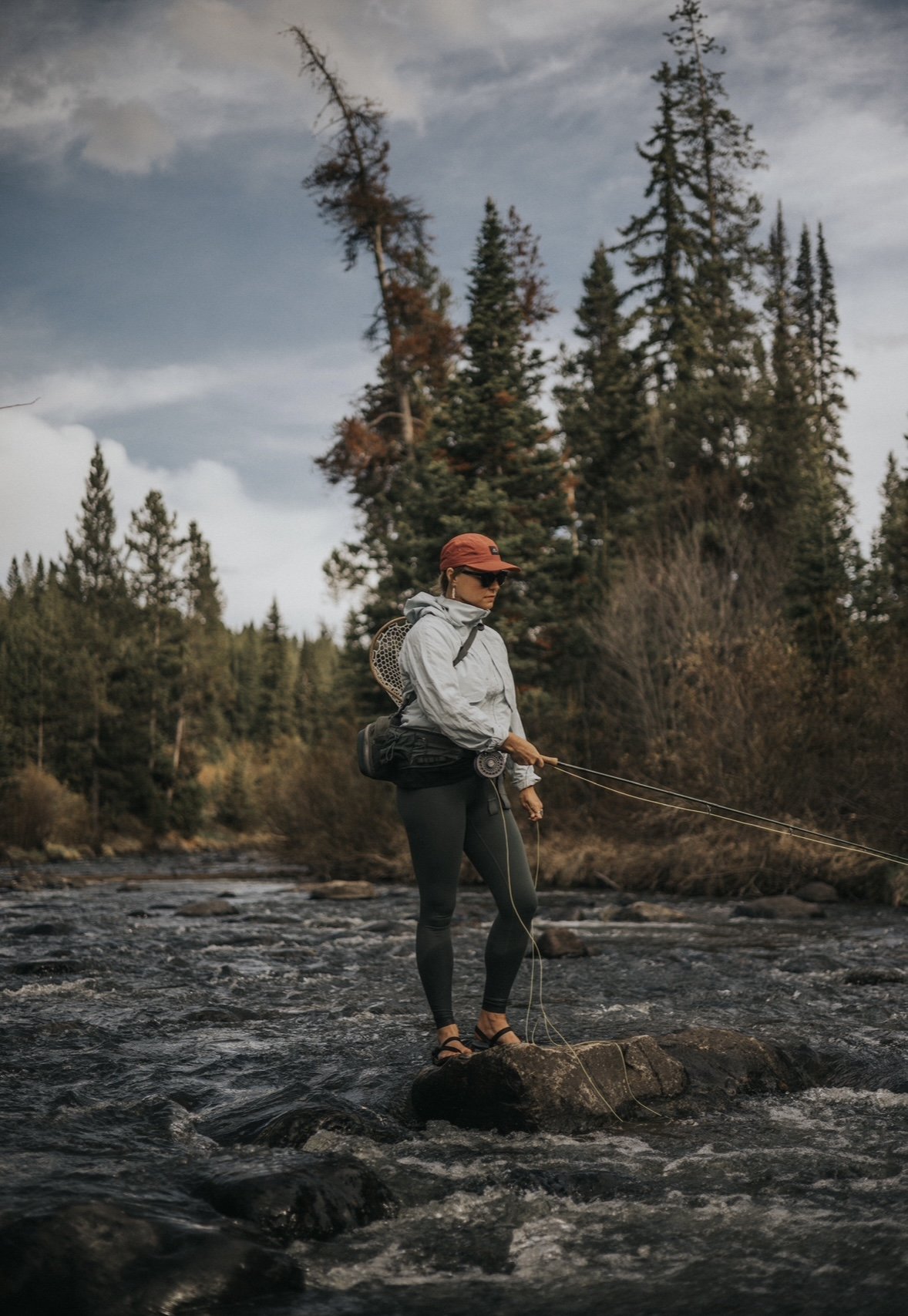
Footwear for Fly Anglers: Beyond the Wading Boot
For those who have been following along, you know that as a functional movement and mobility specialist turned fly angler and instructor, I have strong opinions when it comes to footwear and foot health. What we put on our feet directly affects how we move and perform on the water, and it also influences the long-term health of our feet, ankles, and entire bodies, especially for those who spend a lot of time on the river.
Most major fly fishing apparel brands produce a wide range of wading boots and wet wading options, with more women-specific designs becoming available in recent years. While I absolutely rely on traditional wading boots in many scenarios, there are also several lesser-known, water-friendly options that have become personal favorites of mine, particularly during the warmer months. Let’s take a look outside of the standard wading boot box and into a broader category of footwear that supports both movement and foot health.
Astral
Astrals are currently my top choice for wet wading footwear. They consistently hit the key criteria I look for, including a wide toe box, zero drop design, excellent non-slip traction, quick-drying materials, and a lightweight feel. They offer several styles depending on preference and intended use. I’ve personally spent a lot of time in both the Rassler and the Loyak and have found them reliable and comfortable across a range of fisheries.
Vivobarefoot
Vivobarefoot sits on the higher end of the minimalist footwear spectrum. They offer a wide variety of styles, including options suitable for outdoor adventures, gym and fitness use, and even everyday casual wear. While they are an investment, Vivobarefoot shoes can be a great way to intentionally increase the amount of time you spend in minimalist footwear, which can positively influence foot strength and sensory awareness over time.
Earth Runners
Earth Runners are highly minimal in their design. While I do fly fish in them occasionally, they are best suited for softer substrates, days spent on the boat, or as everyday sandals similar to flip flops. I also enjoy them for hot summer walks and hikes when minimal coverage and maximum ground feel are priorities.
Altra Lone Peak Trail Runners
For longer hikes into fishing spots, regular daily walks, or even general wear around town, the Lone Peak trail runners are often my go-to shoe. I mention this specific model because it works well for me, though Altra offers a wide range of styles to suit different needs. For those who are beginning a gradual transition toward more minimalist footwear, Altra provides a helpful middle ground, with wide toe boxes and zero drop designs paired with built-in cushioning and support.
As individuals, it’s important to assess footwear choices through the lens of both our bodies and the landscapes we move through. The terrain, duration, and style of fishing all play a role in determining what footwear is most appropriate on a given day. I choose my footwear based on the fishery I’ll be exploring, how I plan to move through it, and how long I’ll be on the water.
For those who are devoted to traditional wading boots, incorporating more minimalist footwear into daily life away from the river can still have a meaningful impact on foot, ankle, and whole-body mobility. Any transition toward minimalist footwear should be gradual and intentional. I recommend reviewing Earth Runners’ guide on transitioning to minimalist shoes, and if you are dealing with chronic foot pain or existing conditions, consulting with a medical professional is always a smart step.
Finally, it’s worth remembering that comprehensive foot health involves more than just footwear. Movement variety, strength, mobility, and sensory input all matter. You can visit the Wade Well YouTube channel to watch an introductory video outlining some of my foundational foot health practices.
Happy walking and wading.
Not All Bobbers Are Created Equal: Better Buy The Best.
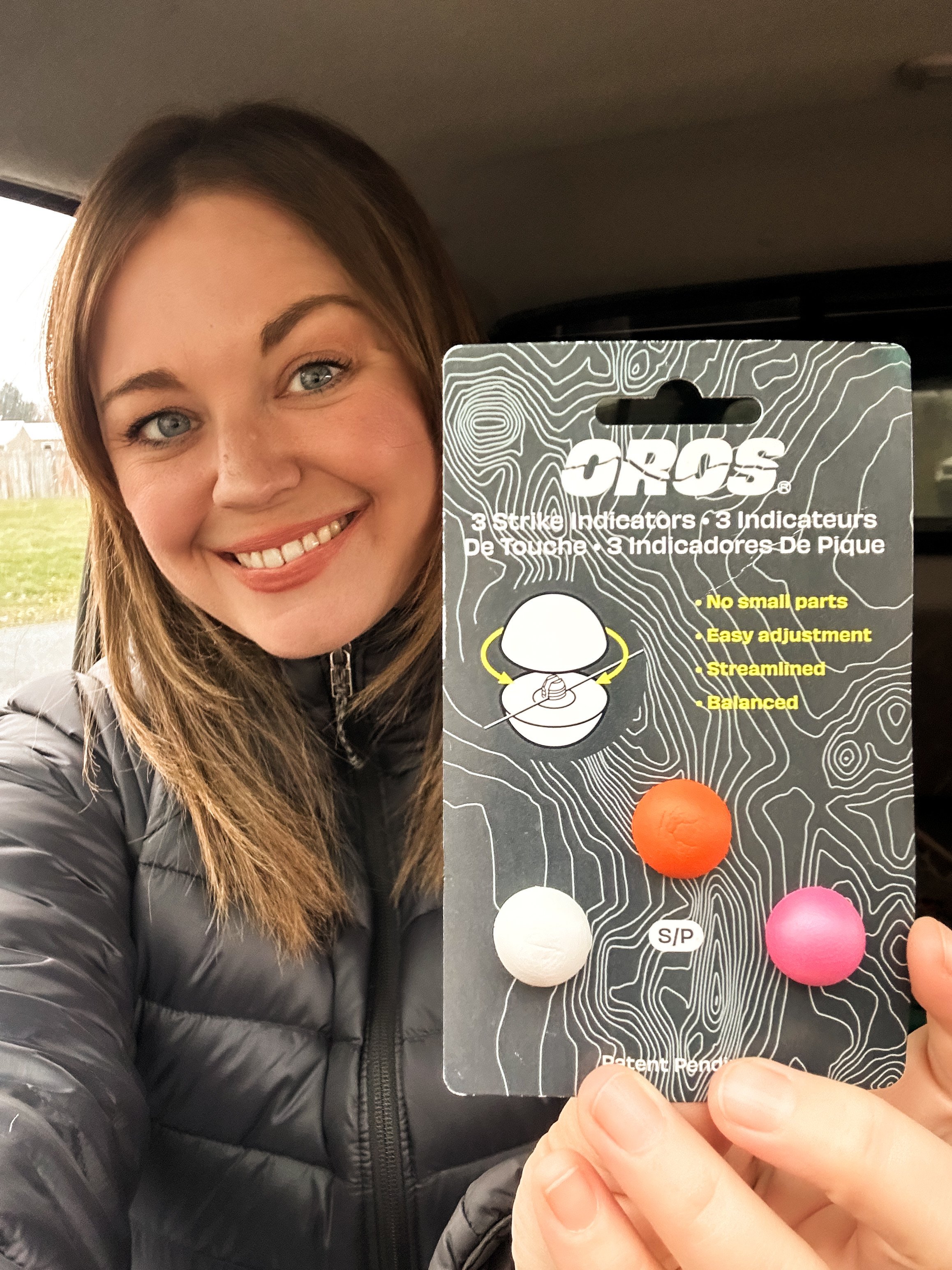
Let’s start by clearing the air: “strike indicators” are indeed bobbers. You heard it here first. New fly anglers, in case there’s been any confusion based upon terminology and fly fish jargon being thrown around, make note. And in case you weren’t already aware, bobbers are in fact used by many while fly fishing. Check out this YouTube video from Orvis that shares some of the basics of beginner bobber fly fishing with nymphs. On to the subject at hand…
Is there a brand of fly fishing bobber that’s far superior to the others?
The short answer is yes, in my opinion, after using most all of the stylers of strike indicators on the market, the OROS design lands on top. Here’s why:
They’re easy to adjust on your rig. One of the banes of indicator nymph fishing is that it can require a fair amount of readjustment in order to ensure that your rig is the correct length while presenting your fly within the “strike zone”(areas where fish are present and feeding). Even more, if you’re nymphing on a stretch of water where there are distinct changes in water depth, readjusting the length between your bobber and fly is oftentimes necessary. The OROS design makes it incredibly easy to move your bobber up and down the length of your leader, making it simple and easy to execute those changes when needed.
They don’t kink your leader. While not always the case, there are various bobber designs that wind up bending your leader, leaving behind a kink and disruption within the smooth quality of your presentation once the bobber’s removed. The OROS design completely avoids creating any pesky bends in your leader.
They stay in place. If you haven’t experienced the headache of an indicator regularly sliding up and down your leader consider yourself lucky. OROS, when tightened appropriately, always manage to stay secured in place. A serious win.
They’re durable. What can I say, I just recently picked up a new three pack while going into the winter season which also happens to be my most heavy nymph fishing season, but I’ve had the same handful of OROS indicators for two years and they remain to be in great working order.
They’re user friendly. A feature that may be my #1, the OROS design is generally quite easy to handle, even for those of us who may not have the most nimble of fingers. While the fine tune motor skills required within fly fishing can serve as a barrier for plenty, these bobbers most definitely do their best to contribute to a greater landscape of accessibility.
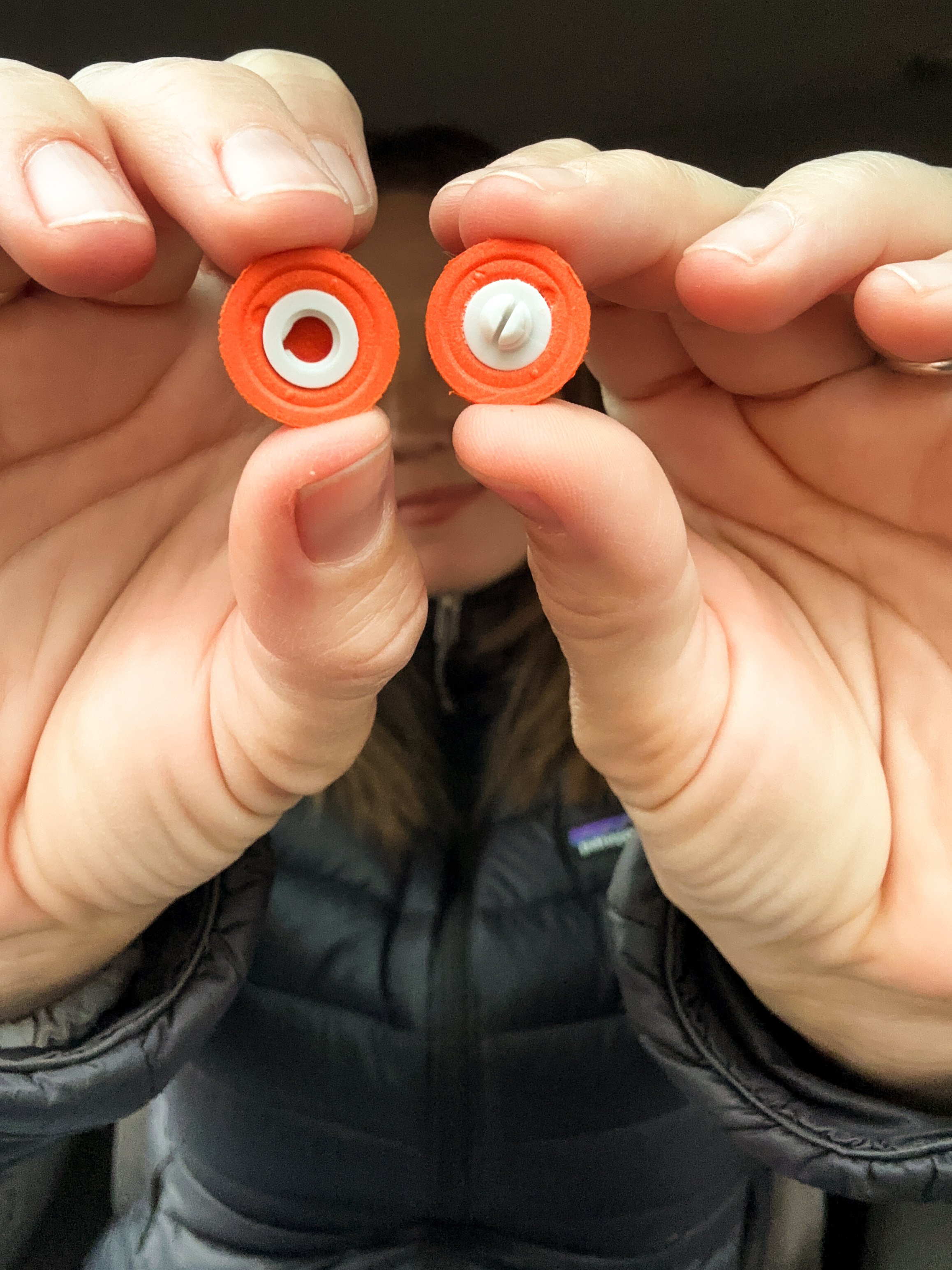
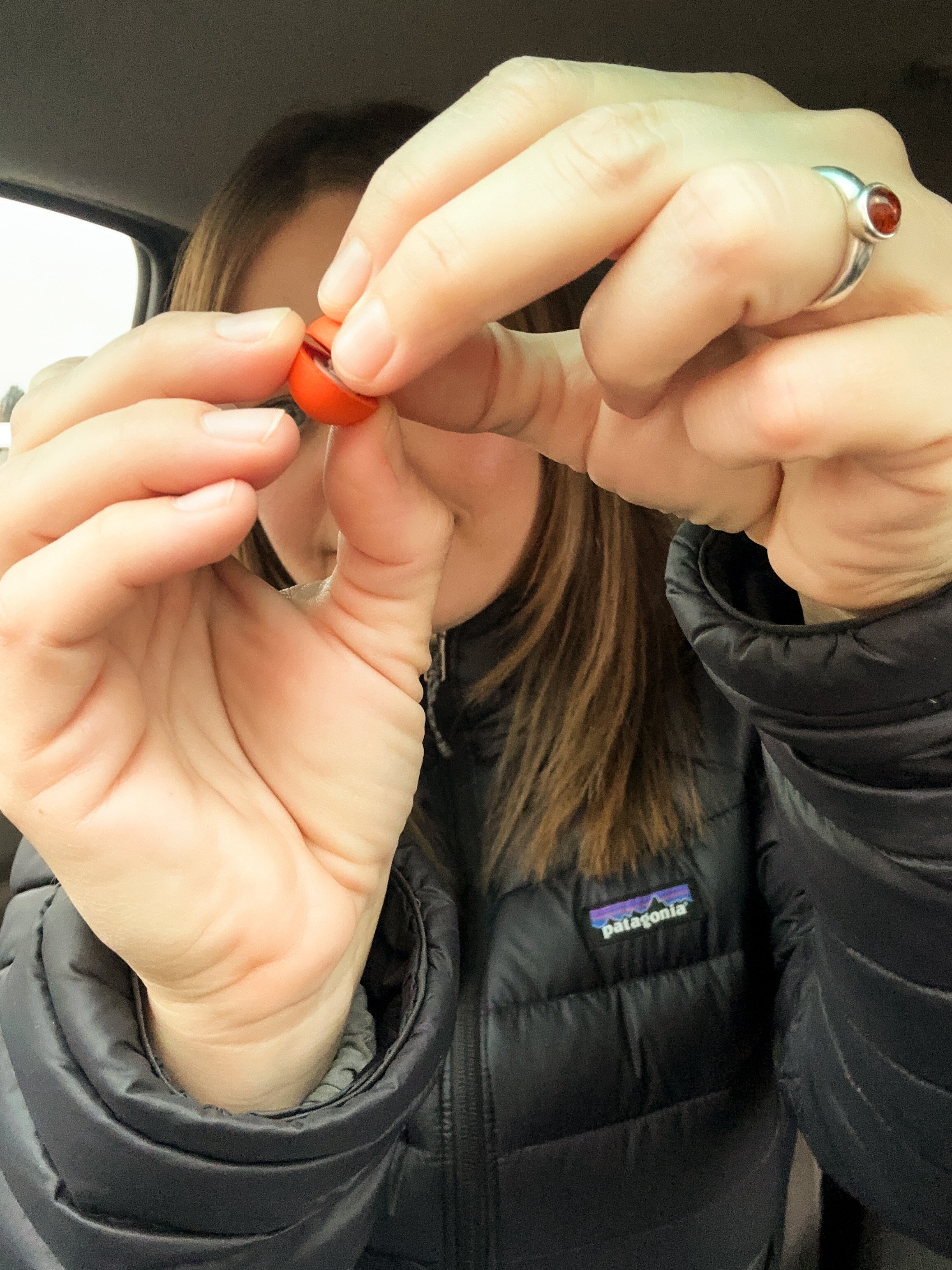
Want to see the OROS in action along with an in-depth product review? Check out this share from Mad Rivers Outfitters on YouTube, another one of my favorite channels to explore for useful education and information. Click here to learn more about the OROS Strike Indicators on their website. Happy fishing, friends!
Fly Fish + Hiking Fly Box Essentials
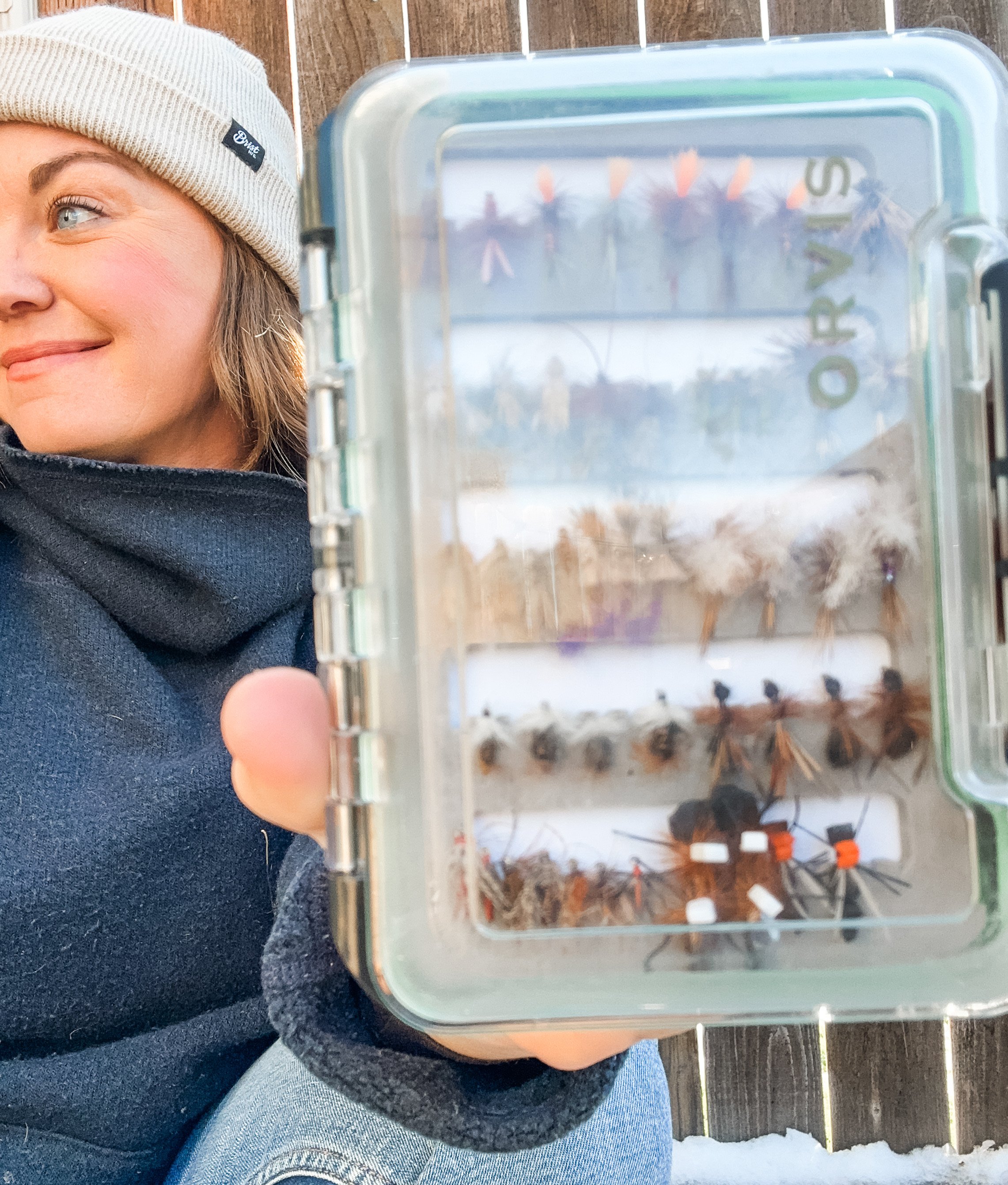
For those who love both day trip and multi-day hiking and fly fishing excursions, maximizing space in your backpack while ensuring that all of the essentials are along for the ride is critical. I’m certainly an angler who has oh so many fly boxes(too many fly boxes?), but when I’m hiking substantially longer distances to fish I tend to take a very different approach. Rather than filling up precious cargo space in my bag with multiple fly boxes, I prefer to carry one single box that checks all of the boxes. Because let’s be honest, snacks, water, and plenty of clothing layers need to be a priority. Check out how I go about organizing my hike and fly fish box….
Streamers
While everyone has their own methods and tactics when approaching the water, whether fishing a new destination or a regular hometown stretch, I’m often one who opts for small streamers while prospecting for trout. These flies which are typically fashioned to imitate small baitfish are incredibly versatile and can be fished in a variety of ways both on still water(lakes and reservoirs) as well as rivers and streams. Check out this YouTube video from Orvis that serves as a great ‘how to’ highlighting streamer fishing for trout. I typically equip myself with several sizes and color variations of each pattern, leaning towards more natural colors(white, olive, tan, and black).
The top three streamers that always make it into my box:
Conehead Woolly Bugger
Egg Sucking Leech
Mini Sculpzilla
Dry Flies
Oftentimes the style of fly that’s most frequently associated with fly fishing, arming yourself with a solid array of versatile dry flies, whether they fall beneath the category of mayflies, caddis flies, stoneflies, midges, or terrestrials is essential. While many fly anglers have numerous fly boxes filled exclusively with dry fly variations, when embarking upon more streamlined ventures it’s important to narrow it down to a well-rounded and simplified assortment that’s appropriate for the season. The overarching subject of dry flies tends to be rather vast, but this beginners guide to fly fishing dry flies is a great starting point.
The top SIX that always make it into my box(because I couldn’t just pick three):
X-Caddis(olive)
Stimulator(orange and/or yellow)
Purple Haze
Sparkle Dun(variation dependent upon the season)
Foam and/or Flying Ant
Renegade

Nymphs & Wet Flies
For those who’re new to the sport of fly fishing, what you may not realize is that the mass majority of the daily diet for a trout is acquired from subsurface food sources in the water. That’s where nymphs and wet flies step in. Variations of these fly patterns that are fished anywhere between the area just below surface of the water in the “film” or deep into the water column, even bouncing off of bottom, are incredibly productive. While there are many methods and techniques for fishing nymphs and wet flies, this video introduction to nymph and wet fly fishing, also created by Orvis, offers a firm foundation.
The top three nymphs that always make it into my box:
Sexy Walt’s Worm
Matchstick Quill Jig
Lite Brite(Purple and/or Pink)
The top three wet flies that always make it into my box:
Gold Ribbed Hares Ear
Red Ass Kelso
Birds Nest

Another important area to note is that in some circumstances hiking to fly fishing destinations can present some combination of biodiversity and elevation changes to be taken into account. If your outing is going to include a notable shift in environments don’t forget to bring along fly variations that speak to those particular environments that you may encounter. The flies that I tend to fish at 4000ft is at times quite a bit different from what I’m fishing at 8000ft on any given day. And even if you don’t live in a mountainous area potential changes in the ecosystem can certainly play a role in what insects are present, the temperature and condition of the water, and the behavior of the fish.
Stay tuned for some upcoming articles that dig a bit deeper into all of the fly fish and hiking gear, equipment, and apparel that I happen to love, as well as other pieces that highlight functional movement, mobility, and mindfulness methods to support your hikes while fly fishing. Winter can serve as a fantastic time to research, plan and plot, and get geared up for the upcoming Summer season ahead.
Sit Down More, Move Better: Why Ground Sitting Supports Whole Body Mobility
Didn’t see that one coming, did you?
You’ve likely heard the phrase “sitting is the new smoking” tossed around over the past several years. The reality is a bit more nuanced. Sitting itself isn’t inherently bad, but sitting in the same position, day after day, without much variation, is where many of us start to run into trouble.
This is where ground sitting, also known as floor sitting, comes into play. It offers an enormous return on investment for nearly everyone, and perhaps even more so for those of us who fly fish, hike, and spend time moving through outdoor environments. So what makes ground sitting so useful, and how can you begin incorporating it into your daily life?
Why Ground Sitting?
Ground sitting manages to accomplish several things at once.
If we want to maintain our ability to get up and down from the ground with relative ease, the most straightforward solution is to regularly practice getting up and down from the ground. Ground sitting naturally supports this capacity.
What tends to happen once we’re seated on the floor is frequent, often unconscious, position changes. For most people, sitting on the floor in one static shape becomes uncomfortable fairly quickly. As a result, the body begins to explore different ranges of motion, particularly through the hips, knees, ankles, and spine.
Cross-legged sitting, legs straddled outward, low kneeling, side sitting, and lying down in different orientations are all common. Each shift exposes your joints to new angles and shapes, helping to mobilize tissues and keep them well lubricated. Over time, this variety supports resilience, adaptability, and overall movement confidence.
How Should I Begin?
When introducing a new movement habit, consistency matters.
While casually sprinkling ground sitting into your day is helpful, creating a simple, repeatable routine can make it far more effective. For example, sitting on the floor for ten minutes each morning while drinking coffee is an easy way to begin the day with basic functional movement.
Ground sitting can also show up organically throughout the day. Playing with pets, reading, organizing fly boxes, or sorting gear are all natural opportunities to spend time on the floor without needing to carve out extra time.
Modifying Ground Sitting for Accessibility
While sitting on the floor may seem simple, it does require a baseline level of mobility that not everyone currently has. The good news is that ground sitting is highly adaptable.
Using props such as yoga bolsters, blankets, pillows, or couch cushions can help bring the floor closer to you and reduce the demand on your joints. Elevating your hips often makes a significant difference in comfort and sustainability.
If getting back up from the ground feels challenging, set yourself up near a stable piece of furniture that you can use for support. Over time, as strength and coordination improve, you may find that you need fewer props and less assistance to transition back to standing.
Try This
As you settle into sitting on the floor, notice how many positions you naturally move through. You’ll likely find yourself changing the angles of your ankles, knees, and hips fairly often. You may even shift your entire body position multiple times.
More positions generally mean more benefit. That might include lying down briefly and sitting back up again, which is simply an organically occurring sit-up. You may also notice that many of the shapes your body finds resemble movements you’d see in the gym, a yoga class, or a Pilates studio.
Your ground sitting practice is a quiet, effective way to layer functional movement and mobility into everyday life, even while you’re technically seated.

Five Ways to Stay Engaged with Your Fly Fishing Practice While at Home
While it’s probably safe to say that we all prefer our precious time spent adventuring on our favorite fisheries over all else, life doesn’t always allow for constant jaunts to our home waters or exciting new destination fisheries. The good news is that there are tons of ways to not only stay engaged and excited about our fly angling practice while at home, but those efforts that we make in-between our outings play a huge role in our growth as anglers. Here are a few of my favorite ways to continue learning and exploring while I’m hanging at home…
1) Organizing fly boxes.
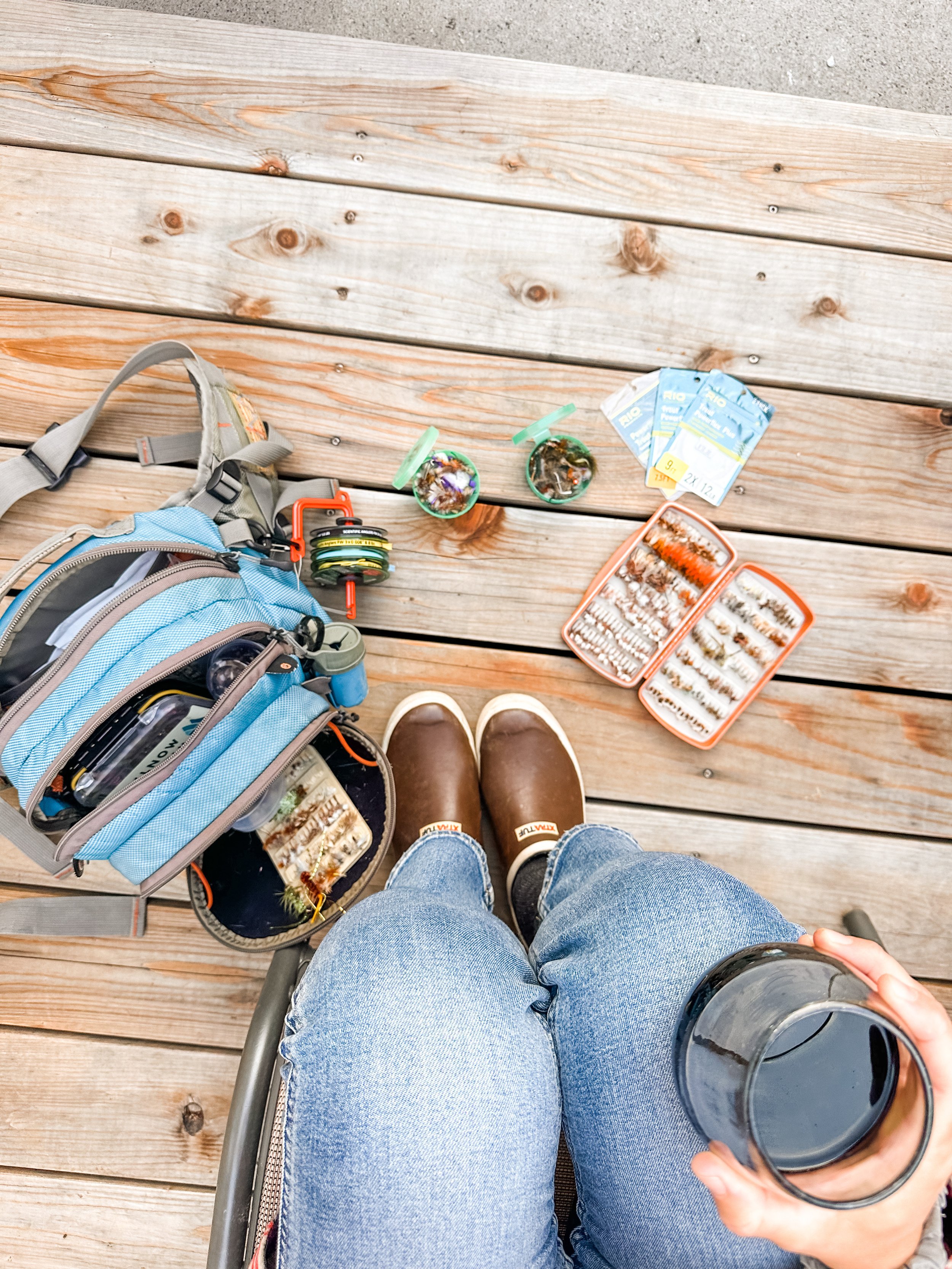
Setting aside time to organize my fly boxes remains to be one of my favorite at-home fly fishing activities. There are many different schools of thought in terms of how to go about this task; over the years I’ve tried on various methods and continue to experiment from time to time. While some organize via specific fly types designated to their own boxes(a box for nymphs, a box for dry flies, a box for streamers, etc.) others are more particular about orienting their boxes seasonally, regionally, or based upon specific insect life cycles. At the end of the day it’s really up to the individual angler and their own preferred way of locating their flies(while ensuring that they have exactly what they need) with ease while on the water. My personal favorite fly boxes on planet earth? Without a moments hesitation, that would be the Tacky Pescador fly boxes from Fishpond. I have several in a variety of sizes.
2) Taking inventory of gear.
This job tends to be fairly quick and easy for me, but it is an essential step nonetheless. Pieces of equipment that I frequently take inventory of in-between trips include: flies that may need replenishing, tippet, floatant, and leaders. I also never hit the water without a few snacks tucked into my pack, so any turkey sticks or granola bars that may have been consumed are always quick to be restocked for next time around. A hangry fly angler is not a happy fly angler! The three brands that I most regularly use to stock my fly line, leaders, tippet and floating include Loon Outdoors, Scientific Anglers, and Rio Products.
3) Crimping barbs.
While some of my flies are tied on barbless hooks, the mass majority do indeed contain barbs. Of the many different areas that compose my fly angling ethics, crimping my barbs is definitely high on my list. This gesture not only allows for quick and easy hook removals and a much less pronounced impact on fish, but it also makes all of the difference in the world in the case that a fly hook might unwittingly wind up in my own body or clothing. Everyone wins with a crimped barb, and what better way to save time on the water than to just de-barb your hooks while at home? Here’s a quick video tutorial on the Orvis YouTube channel that shares how to de-barb your hooks..

4) Practicing knots.
Practice makes perfect, as they say. The very best way to become proficient and swift while tying knots on the water is to build that muscle memory while at home. Depending upon the individual angler, the variety of species they target, and the types of fisheries that they explore, the essential knot knowledge needed will indeed vary. At the very least, most freshwater fly anglers will want to know the loop to loop, double surgeons, and the clinch and/or improved clinch knots as a baseline. Additional ties including the blood knot, nail knot, and a non-slip or perfection loop knot will also come in handy, too. You can use any material that you’d like while learning your knots(pictured here I’m repurposing some old fly line). I also recommend practicing your knots on your leader/tippet material as well since that will represent how you’ll experience tying them while on the water. You can find a great guide to basic fly fishing knots via this Orvis YouTube video with Tom Rosenbauer.

5) Study and research.
Finally, your preferred style of study and research is always an area that provides both education and inspiration. Of course the subject matter and topics available to dig into are nearly endless, from entomology to reading water to casting mechanics to specific species and their ecosystems. Beyond that, there’s certainly no shortage of narrative literature, short films and documentary, non-fiction work, podcasts, and blogs and social media content to keep you entertained and interested. A great option that I particularly love that seamlessly combines entertainment with education is the YETI YouTube channel. Choose your favorite medium and enjoy!
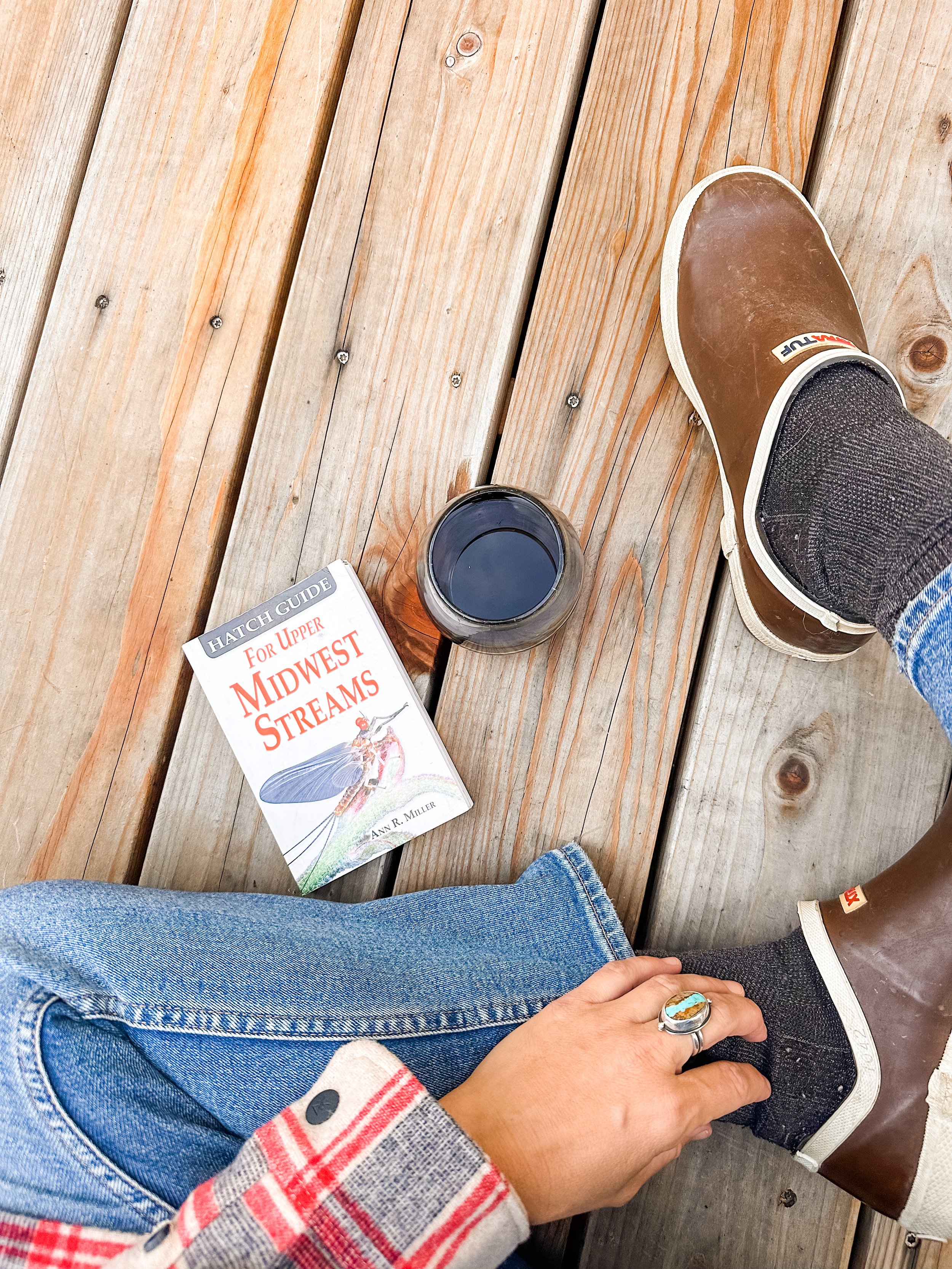
One more area that I didn’t mention is that of actual dry-land fly casting practice. In fact I love it so much that I developed my own unique and one of a kind Wade Well ‘Fluent Fly Casting Method’. That topic however is one expansive enough to save for a blog post all its own. Stay tuned!
Fly Angling for Holistic Wellness
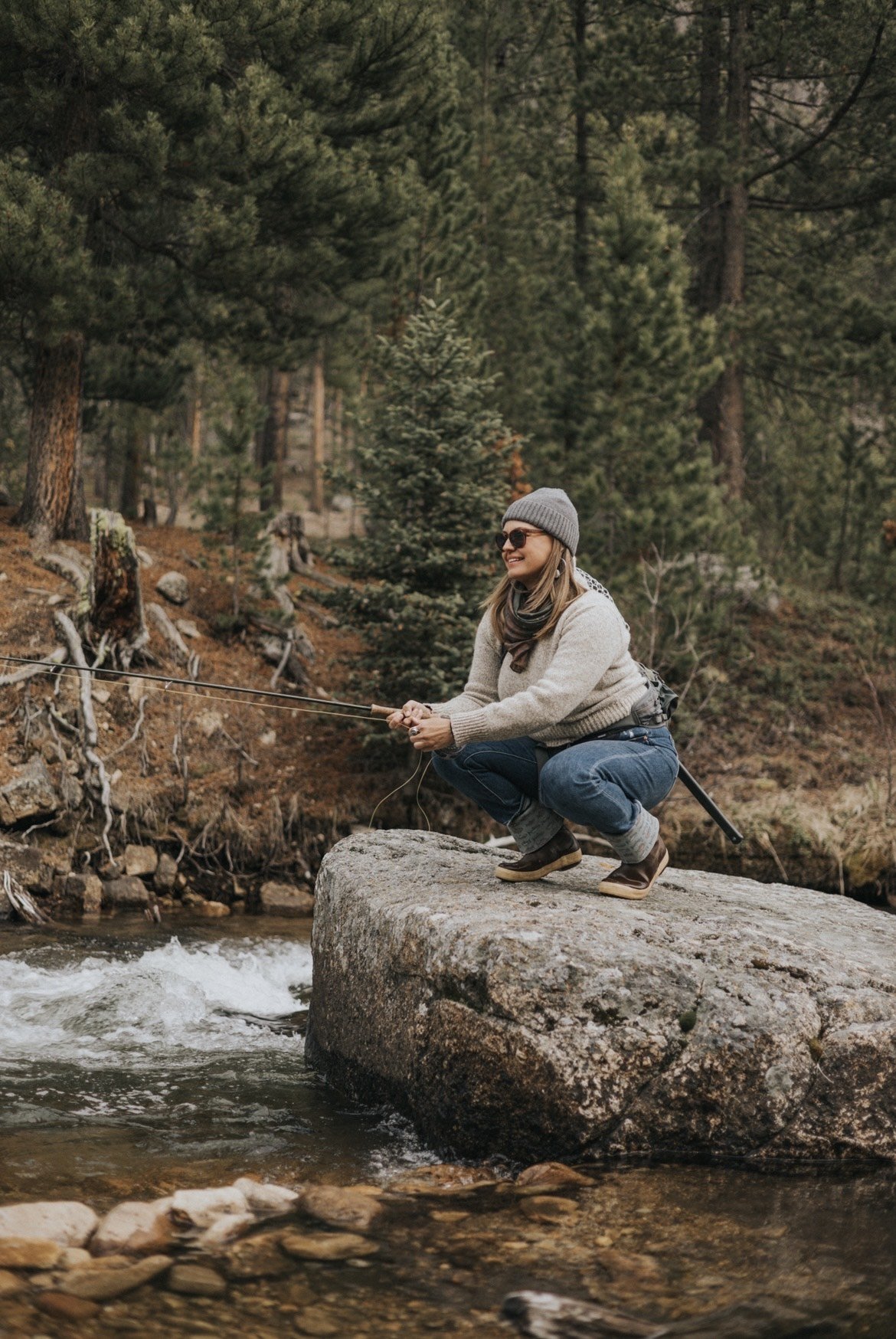
When considering the imagery of a fly angler perched within a crystal clear trout stream, drawing long elegant casts while nestled between snow-capped peaks and deep green conifers, it isn’t difficult to imagine how this pastime may enhance our well-being. And while there have been many who’ve likened fly fishing to yoga over the years, and for good reason, the wellness-focused elements that compose the foundation of fly fishing reach well beyond any one school of thought. Fly angling has long been known as being that of a greatly therapeutic sport; one rich in time spent exploring pristine fisheries ,wild terrain, as well as urban areas of natural refuge. For those who’ve chosen to develop a deeper relationship with their time on the water, it may even be considered that of a full and well-rounded wellness practice in and of itself, composed of endless potential to improve our health and quality of life. Not only does fly fishing inherently lean towards a mindful movement practice, it also offers ample opportunity to incorporate and experience additional wellness methods into any given venture. Here are just a few ways that it can enrich our lives and contribute to our well-being.
Time in the Outdoors. The body of research that now supports the benefits of spending time outside is both voluminous and encouraging. Improved sleep, reduced stress, greater immune function, and better respiratory health are just a few of the many areas where both physical and mental health are boosted by the outdoors. According to a 2019 study that analyzed data from 19,806 participants, their results found that spending a minimum of 120 minutes outside weekly showed substantial progress within the above areas. Even more, evidence found while studying Forest Bathing in Japan presented a marked decrease in blood pressure and heart rate within those participants who engaged in regular visits to green spaces. Learn more about the many benefits of exercise in the outdoors here.
Fly Casting as Mindful Movement. With an aesthetic that’s characterized by grace and intention, the presence of a flow-like meditative quality is firmly embedded in fly casting. Similar to any application of mindful movement(think yoga, tai chi, or even modern dance), the practice of casting facilitates space to slow down and experience the benefits of a mind-body connection. With various styles to explore and master, from single hand to two hand variations, there’s ample opportunity to continue to learn, refine, and even develop new neural pathways. For an additional layer of connected-ness, integrating a breath work practice while fly casting can offer even more benefits.
Natural Movement. For those who choose to walk and wade while fly fishing, you’ll likely find yourself fully immersed within a myriad of natural movement patterns throughout any given outing. Walking in and of itself provides enormous benefits that range from stress reduction, cardiovascular health, and cognitive improvement. Additionally, more recent research, including the findings from this JAMA Neurology published study, demonstrate that those who regularly walk significantly lower their risk of developing dementia. Meanwhile, wading through a moving current asks for a keen sense of balance and proprioception, full body strength, and clear focus. Beyond our basic locomotion, we have the opportunity to engage with additional natural movement patterns as we move through variable and un-groomed terrain. Think climbing up and down steep riverbanks, hip-hinging to crawl beneath low hanging branches, stepping up and over downed trees, and squatting to catch, handle, and release fish.
Cold Plunge Potential. While many target a wide variety of fish on a fly rod, from saltwater species such as permit or tarpon to warm water species such as musky or bass, a large demographic of fly anglers choose to explore those coldwater trout fisheries that boast gin-clear water that are oftentimes either spring or mountain fed. With an emphasis on “coldwater”, which is in fact an eco-prerequisite for wild and native trout to survive, these rivers and streams typically range in temperature from 40 to 70 degrees Fahrenheit, with optimal temps hovering between 52 to 64 degrees. Coincidentally, the ideal temperature range for cold plunging is generally understood as being between 50 and 59 degrees. If you’ve chosen to take a hold of the trending practice of cold plunging, why not complement your fly fishing outing with a quick invigorating dip before packing it in for the day? Check out this recent Mind Body Green article that highlights the many science-backed therapeutic benefits of cold exposure here, along with some great how-to recommendations for beginners.
In an era where many of us are living within the constraints of long to-do lists, tight timelines, and limited opportunity to invest in our holistic wellness, discovering a practice that seamlessly checks so many of the health-focused boxes is an inarguable win. Whether you’re in need of a quiet solo expedition characterized by introspection, or an avenue to meet new people and enjoy a day outdoors among friends, the versatility of fly angling offers a wealth of wellness for everyone.
Wading Strong: Simple At Home Practices for Better Movement on the Water
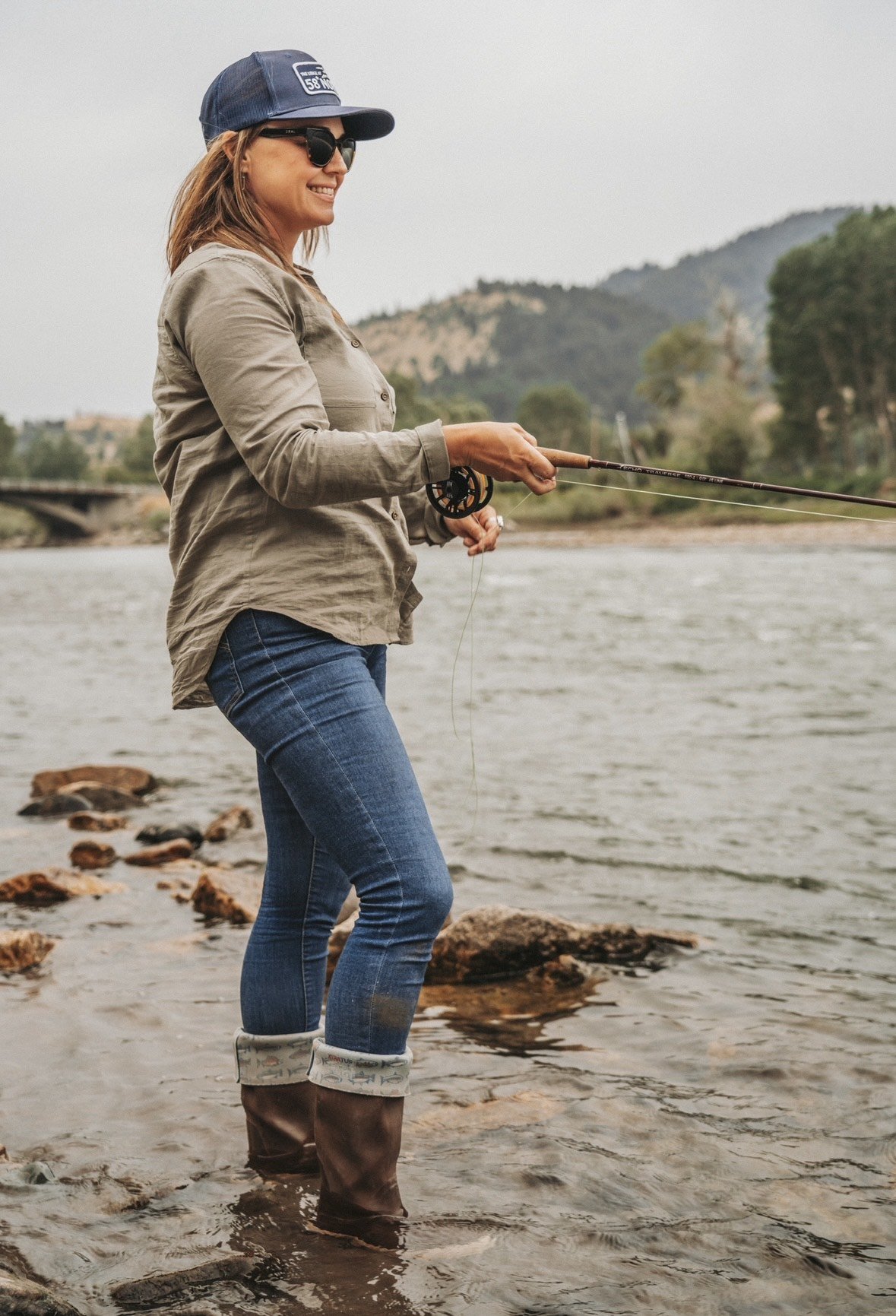
Walking and wading may seem simple on the surface, but both can present a surprising number of physical challenges. This is especially true when we find ourselves moving through wild, uneven, and ungroomed terrain.
Increasing our capacity to move well as we explore fisheries and wild places is one of the best ways to keep ourselves returning to them for years to come. While simply spending time outdoors is a powerful driver of resilience, there are also small, simple practices we can integrate into daily life that carry real impact. For anglers who spend long days covering ground, as well as those newer to wading, refining the foundational skills that support walking, balance, and stability matters. Below are a few accessible ways to do exactly that, all from home.
Single Leg Balance
For yogis or martial artists, single leg balance may already feel familiar. What’s often overlooked is that walking itself is essentially a repeated sequence of single leg balancing, just performed more quickly. While wading, we’re frequently asked to balance on one leg for longer or more deliberate periods of time. Whether you’re untangling a fly from a boot lace or carefully extracting one foot from deep mud, the ability to stand well on one leg is incredibly useful.
Try: Stand on one foot for short periods throughout the day. Brush your teeth, wait for the kettle to boil, or pause while standing in line. Use a wall or stable surface for support if needed, and gradually increase the duration over time. Practice on both sides, and as you improve you can integrate gaze shifts and head movement to challenge your balance even more.
Balanced Walking
All walking involves balance, but angling often demands variations that differ from everyday gait. Crossing downed trees, stepping through boulder fields, or navigating narrow banks requires more precision and control. Regular exposure to these types of walking patterns helps build neuromuscular awareness and preparedness.
Try: Incorporate a tightrope style walk into your routine. Practice heel to toe walking forward and backward in your driveway, yard, or indoor space. Use sidewalk seams or floor tiles as visual guides if available. As a progression, balance walk along a low beam or a 2x4.
Being Barefoot
Most modern footwear limits the foot’s ability to sense and adapt to the ground beneath it. Over time, this can reduce strength, resilience, and responsiveness in the feet and ankles. Spending intentional time barefoot gives the feet an opportunity to re engage with the environment and rebuild capacity.
Try: Begin spending more time barefoot at home. If your feet are usually confined to shoes or slippers, mild soreness is normal at first. Ease in gradually and vary the surfaces you walk on, such as carpet, hardwood, or outdoor ground. For those interested in minimalist footwear, this is a helpful transition strategy.
Toe Neuromapping
We often think of fingers as independent contributors to hand function, but rarely extend that same consideration to our toes. Strong, well coordinated toes play a significant role in balance and ground connection. Improving the brain to toe connection can meaningfully enhance stability.
Try: While barefoot and either seated or standing, lift and lower just your big toe, then switch to the other foot. Next, lift and lower the smaller toes while keeping the big toe down. Alternate sides and repeat for several rounds. Patience is key, this connection builds with practice.
Vestibular Drills
Beyond muscles and joints, the vestibular system plays a central role in balance. This sensory system integrates input from the inner ear and eyes to help orient the body in space. Simple vestibular drills can support this system, and many can be done seated.
Try: Sit comfortably and extend one arm straight out in front of you with a thumbs up. Keep your eyes focused on your thumb while turning your head left and right, then up and down. Perform several repetitions in each direction. Progress by standing, then eventually practicing on one leg.
Myofascial Release for the Feet
Soft tissue health influences how well the feet sense and respond to the ground. Myofascial release can support mobility, overall tissue quality and hydration, and sensory awareness.
Try: Roll the soles of your feet using a ball. A tennis ball is a good starting point for sensitive feet, while firmer balls can be introduced over time. Cover the entire surface from the ball mounds to the heel, paying attention to the arches. Use pressure that feels sustainable and avoid pain. Roll forward and backward, as well as side to side, to explore different tissue layers.
Walking and wading well isn’t about doing anything extreme. It’s about building a foundation of balance, awareness, and adaptability that supports you every time you step into moving water or uneven ground. These small practices add up, helping you feel steadier, more confident, and more capable wherever your fishing takes you.
Mindfulness on the Water: Simple Practices to Deepen Your Fly Fishing Experience
It’s no new revelation that fly angling lends itself to being a deeply therapeutic pursuit. There are long standing organizations such as Casting for Recovery, Project Healing Waters, and The Mayfly Project, just to name a few, many of whom have devoted decades to creating space for healing through fly fishing. Volumes of literature speak to the deeper experiences we encounter on the water, and perhaps now more than ever, the idea that many of us are fishing for something greater than the fish themselves has become increasingly mainstream.
This points to a few core truths. We have a collective need to connect more deeply with ourselves, a collective need to reconnect with the natural world, and, quite often, a need to feel genuine connection within community as well. Fly fishing facilitates all of this and then some. It offers physical, psychological, and interpersonal benefits simply by nature of the experience. I sometimes wonder if the pull I feel toward the river is actually coming from the many systems of my mind and body quietly reminding me that I need time moving, breathing, and being outdoors. I usually listen, and I almost always leave feeling better than when I arrived.
One of the things that keeps fly angling endlessly engaging is its wide and expansive scope. There are always new fly patterns to learn, new water to explore, new species to pursue, and new casting skills to refine. In the spirit of honoring that richness, there are also meaningful ways to shift our perspective and intention while we’re out getting a line wet.
While fly fishing has often been compared to practices like yoga or Taoism, it truly stands on its own as a uniquely complete and well rounded wellness practice. For those who feel called to layer in a little more presence while on the water or in the woods, here are a few simple mindfulness practices that integrate naturally into a day of fishing.
Breath Awareness
We’re breathing all day long, which means we have an incredibly powerful tool available to us at any moment. Breath awareness can take many forms, depending on the individual and what they’re hoping to cultivate. For many people, simply paying attention to the breath is deeply grounding. It draws us into the present moment, provides a rhythmic focal point, and gently settles the nervous system.
Try: Breath counts. Research suggests that six nasal breaths per minute supports nervous system regulation. Each breath follows a five second inhale and a five second exhale. The next time you arrive at a run and decide to pause and observe, which is almost always worthwhile, try twenty counted breaths using this pattern. It pairs beautifully with reading the water before tying on a fly and taking your first cast.
Mindful Movement
No complicated or pretzel like postures required. Mindful movement simply means paying attention to how you move. A great place to start is by slowing down. Instead of rushing to the next stretch of river or charging toward the opposite bank, take more deliberate and intentional steps. Walking itself is a powerful way to inhabit the body more fully and quiet mental noise.
Try: While wading, experiment with a forefoot first gait pattern, then gently lower the heel. This approach is well suited for uneven and variable terrain and often helps reduce slips and falls. The forefoot refers to the ball of the foot just beneath the toes, not the toes themselves. It offers a broad surface area for stability before completing the step.
Sensory Mapping
Sensory mapping is a well known mindfulness practice that involves consciously tuning into the senses. You can focus on one sense at a time or move through several in sequence. At any point during the day, pause and notice what you’re experiencing through smell, sound, sight, texture, temperature, and physical sensation. Fly fishing naturally lends itself to this practice, especially when stopping to read a new run.
Try: Upon arrival, or even while moving, focus on listening. Notice sounds to the north, south, east, and west of you. Some people enjoy sketching these observations as a literal sensory map, though simply noticing is more than enough.
Intention Setting
Intention setting is similar to goal setting, but without the pressure of performance. It offers a central point of focus while remaining flexible rather than outcome driven. Asking yourself why you chose to come out today is a useful starting point. The surface answer is often “to fish,” but digging a little deeper might reveal intentions such as resting, exploring somewhere new, spending time with a friend, or simply being somewhere quiet. Understanding how you’re showing up helps inform where you go, the pace you keep, and how you engage with the day. And if your intention truly is to feel the tug of a fish on the line, that’s a perfectly valid choice, and one best supported by selecting water where success is likely.
Try: Once you arrive, take a minute or two before moving ahead. Scan your body and notice areas of tension, fatigue, or soreness. Take inventory of your energy, stress level, emotional state, and mental clarity. Understanding your internal landscape is a powerful way to guide your decisions on the water.
Gratitude Scanning
Gratitude sometimes gets wrapped up in clichés, but acknowledging it has measurable effects on perspective, mood, well being, and even brain health. It’s simple, effective, and often overlooked. When we become accustomed to certain places, people, or experiences, it’s easy to take them for granted. A gratitude practice helps interrupt that pattern.
Try: Bookend your time on the water with a brief gratitude scan. Identify two things you’re grateful for upon arrival, and two different things upon departure. There are no rules. You can write them down, take photos, or simply reflect quietly for a moment.
Not every day on the water needs to include extra structure or intention. One of the greatest gifts of fly fishing is how stripped down and simple it can be, free from the to do lists that often dominate daily life. Sometimes focusing on nothing more than the rod in your hand and the insects moving through the brush is exactly what’s needed. Other days, cheering on a friend as they land a fish is more than enough. Regardless of the context, weaving mindfulness into your time outdoors tends to enhance the experience. Over time, these simple practices become second nature, integrated as seamlessly as reading water, seating knots, and pausing to watch a fish kick free and swim away.
The Physical Feat of Mindfully Landing, Handling, and Releasing Fish
For the budding new angler, or those who tend to hit the water with guides or buddies more often than not,you may be in for a bit of a surprise when you first realize that netting your own fish can wind up being the greatest physical feat of the day.
While we’ve been fortunate in recent years to have excellent organizations like Keep Fish Wet leading the charge in safe fish handling education, implementing these best practices can come with a few unexpected asks from your physical self. Executed with ease and sometimes taken for granted, landing and releasing a fish with care often involves far more coordination, mobility, and awareness than it appears.
Below is a breakdown of some of the key physical elements involved in a solid landing, handling, and release, along with simple, practical ways to support your body off the water so you can better care for your fish on it.
Shoulder Mobility
It should go without saying that fly casting demands a fair amount of shoulder mobility. What’s often less obvious is how much shoulder flexion,arm overhead,you need when netting your own fish. This position places additional demands on the shoulder girdle, especially when paired with uneven footing or flowing water.
Maintaining well-moving shoulders is essential, particularly during the net-and-release phase.
Try: Shoulder CARs (Controlled Articular Rotations) are one of the most effective ways to build and maintain usable shoulder range of motion and control. These can be done seated, standing, tall kneeling, or in a quadruped position. A quick daily set of slow, intentional rotations goes a long way in keeping this complex joint system healthy.
Reaching
With the lift of the rod comes an even longer reach from the net-handling arm. Reaching well requires coordination between the shoulder blade, shoulder capsule, arm, and spine. It’s a whole-body task, not just an arm movement.
Keeping these systems working together supports not only fish handling, but plenty of everyday movements as well.
Try: Stack movements by practicing single-arm or two-arm reaches while seated on the floor. Sit cross-legged and reach forward, overhead, and side to side, then switch which leg is in front. Other useful positions include legs straight out, straddled, or any type of squat. Use a yoga block, bolster, or pillows under your seat as needed. Adding gentle trunk rotation can further support spinal health.
Grip Strength
And no, I’m not talking about death-gripping your fish. Please don’t.
Whether you’re using a rubber net or opting for a hands-free release, healthy hands and wrists matter. Even lightly managing a net handle or controlling slack line requires grip endurance and wrist control. When these areas aren’t up to the task, even simple actions can feel surprisingly challenging.
Try: Similar to shoulder CARs, daily wrist CARs performed slowly and intentionally can help maintain wrist mobility. Aim for three rotations in each direction. For added grip work, lightly squeeze a tennis ball while moving through the rotations.
Lower Body Mobility
One of the bigger challenges for many anglers is getting low enough to the water to safely remove a fly and release a fish,without lifting it out of the water. Limited ankle, knee, or hip mobility can make this difficult.
For many anglers, some variation of a squat is the most effective position for keeping fish submerged during release. A mobile lower body also supports checking water temperatures and navigating uneven terrain.
Try: Floor sitting is a deceptively effective way to build and maintain lower body mobility. Regularly shifting between seated positions moves the hips, knees, ankles, and pelvis through a wide range of angles. Use blankets or cushions as needed, and sit near a stable surface if you’ll need help standing back up. If floor sitting isn’t accessible, vary your seated positions in chairs or on the couch and incorporate ankle CARs throughout the day. Aim for about 30 minutes of floor time daily if possible.
Balance & Proprioception
Landing and releasing a fish often involves reaching, pivoting, squatting, and gripping,all while standing in moving water. In the excitement of the moment, it’s easy to forget that keeping your feet under you is still the foundation of the whole operation.
Stability isn’t about staying rigid; it’s about remaining steady within movement. Balance and spatial awareness are key.
Try: Start with sustained single-leg standing. As this becomes more comfortable, add movement,leg swings, arm reaches, or gentle hip hinges,to challenge your ability to re-stabilize. Use a wall or other support as needed while gradually increasing difficulty over time.
Surprisingly enough, safely handling and releasing fish may leave you with some unintentional mobility gains of your own. Keep those rod tips lifting and your squats plenty low.
And if you’re looking for motivation to invest in your movement practice off the water, becoming a more ethical, capable, and mindful angler is as good a reason as any. Your joints,and your fisheries,will thank you.
The Top Ten Things that I Love about Fly Fishing(that have nothing to do with catching fish)
I think most anyone who’s spent a decent amount of time on the water will agree that at some point we realize that fly fishing is about so much more than catching fish. This topic has been the focal point of countless literary works over many decades; what we find while we’re out looking for fish on the fly is the realization that we’ve stepped into a depth of experience that’s rarely matched by other sports. Many shy away from even referring to fly angling as a sport, and will more often liken it to an expression and experience of lived art. As we become increasingly engaged with our medium, what tends to grow is the desire to slow down, become a more keen observer, and absorb the details of our ecosystem more thoroughly. The joy and exhilaration of connecting with a fish on the fly is unique and fantastic in and of itself. And how lucky are we in knowing that there’s so much more to this practice than the fishing alone? Following is a short list of the top ten things that I love about fly fishing that have nothing to do with catching fish…
1-Bird Watching: The scavenging, hunting, calling, mating, and swooping down to swipe a fish right out of the water. Spending time returning to the same water throughout the seasons has allowed for me to witness the process of many species of birds nesting and nurturing their young. Bald eagles have always been a favorite. What a spectacular piece of nature to bear witness to.
2-Foraging & Identifying Plants: I began foraging prior to my introduction to fly fishing, but needless to say the two effortlessly complement one another. Discovering and identifying edible/medicinal plants while out exploring fisheries is such a delight. Likewise, learning how to better identify more plants, trees, and wildflowers even without harvesting is an intricate layer to the experience of being outdoors.
3-Walking & Moving in Nature: The amount of evidence that points to the positive physical and psychological effects that accompany simply being in the outdoors is enormous. I became so enthralled with the biomechanics of fly angling and exploring these wild places that I created an entire mindful movement method devoted to it. It’s a fascinating subject, and one where there’s always room for more exploration and evolution while we discover what it means to move well in the outdoors.
4-Witnessing Bugs Hatch: I’m not sure that I ever noticed hatches taking place before I began fly fishing, and of course now they’re impossible not to see whether I’m out on a fishing excursion or not. What a neat and detailed process, to begin to understand the entire life-cycle of these insects as they relate to the seasons and varied ecosystems that we explore.
5-Watching Wildlife at Work: I love witnessing the progress of beaver dams, nests, dens, beehives and abandoned beds. Sharing space with countless creatures and species that call these environments home always means that there’s so much taking place and to be seen within any stream, lake, forest, and field.
6-Snack Breaks: And not just while on the water, but also within the ritual of carefully selecting and gathering the days tastes and treats, securely tucking them away in anticipation of a moment later to come. Whether alone or in the company of others, those times where we locate a good log to perch on while nibbling on a sandwich or pulling out our portable french press to make a fresh batch of coffee are always a special and integral part of the experience.
7-Observing the Change in Light: From sun-up to sundown, whether it’s a blue bird day or one that’s overcast with diffused light. The golden hours are always tough to beat, but the entire days sequence of light as well as the warmth that it produces impacts how we feel and the paths that we choose to wander.
8-Watching Fish Rise: The slow emerger nips, the aggressive terrestrial nabs, and of course those vertical acrobatic caddis fly launches. While it can be challenging to not immediately cast to rising fish, the skillful angler and observer understand the value of pausing first. Over time I’ve found that sitting down and watching rises with a beverage in hand can be just as satisfying as the fishing itself.
9-The Wide World of Aromas: The fresh pine needles, wildflowers, sagebrush, grasses, soil, and manure all have their own unique scents to be experienced and enjoyed. As we know, our sense of smell has the strongest ability to trigger both emotion and memories. I also find that intentionally tapping into my sense of smell within any given environment tends to have a particularly grounding effect.
10-The Water: Its color, temperature, speed, depth, and structure. I love the huge amount of variance from one body of water to the next, along with studying the seasonal shifts that take place. Again, there’s something particularly engaging about returning to the same water features over the span of time. It offers all sorts of insight into how our climate is shifting, and how it is that we may be impacting the health of our fisheries.
I fell in love with fly fishing precisely because of its richness. It truly is a feast for the senses, a 10 course meal perfectly paired in some of the most beautiful venues the earth has to offer. Consequently, I’ve also found that the more time that I’ve spent shifting my gaze towards these many other elements, the stronger angler that I’ve become. Whether or not you have a tendency to be incredibly focused or catching fish every time you’re out on the water, or you feel fairly neutral about the catching itself, there’s always ample opportunity to enrich your experience in these ecosystems by simply seeing what’s there, and becoming actively and enthusiastically engaged with the gift that is exploring the great outdoors with a fly rod in hand.
Enjoy.