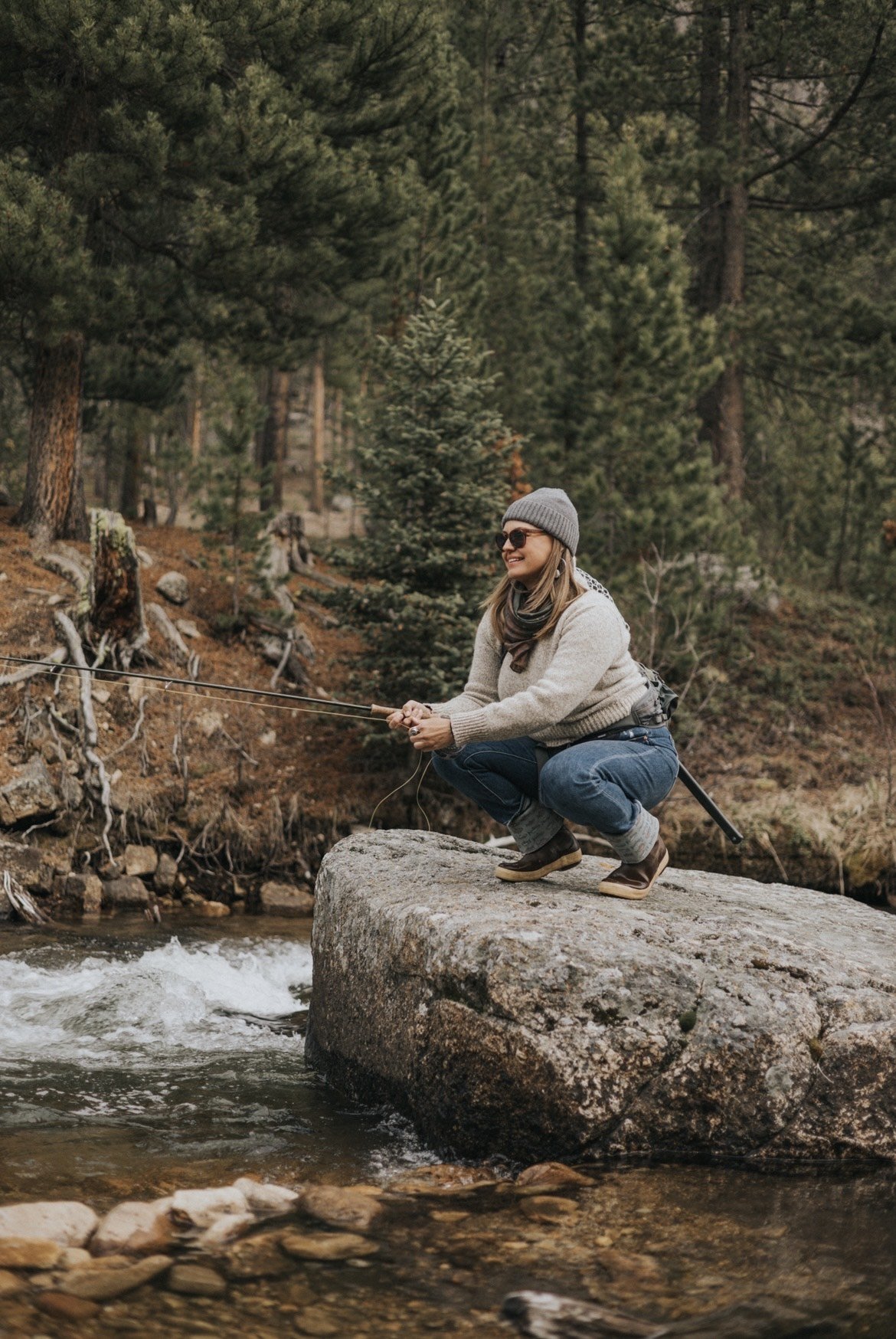
Fly Angling for Holistic Wellness
When considering the imagery of a fly angler perched within a crystal clear trout stream, drawing long elegant casts while nestled between snow-capped peaks and deep green conifers, it isn’t difficult to imagine how this pastime may enhance our well-being. And while there have been many who’ve likened fly fishing to yoga over the years, and for good reason, the wellness-focused elements that compose the foundation of fly fishing reach well beyond any one school of thought. Fly angling has long been known as being that of a greatly therapeutic sport; one rich in time spent exploring pristine fisheries ,wild terrain, as well as urban areas of natural refuge. For those who’ve chosen to develop a deeper relationship with their time on the water, it may even be considered that of a full and well-rounded wellness practice in and of itself, composed of endless potential to improve our health and quality of life. Not only does fly fishing inherently lean towards a mindful movement practice, it also offers ample opportunity to incorporate and experience additional wellness methods into any given venture. Here are just a few ways that it can enrich our lives and contribute to our well-being.
Time in the Outdoors. The body of research that now supports the benefits of spending time outside is both voluminous and encouraging. Improved sleep, reduced stress, greater immune function, and better respiratory health are just a few of the many areas where both physical and mental health are boosted by the outdoors. According to a 2019 study that analyzed data from 19,806 participants, their results found that spending a minimum of 120 minutes outside weekly showed substantial progress within the above areas. Even more, evidence found while studying Forest Bathing in Japan presented a marked decrease in blood pressure and heart rate within those participants who engaged in regular visits to green spaces. Learn more about the many benefits of exercise in the outdoors here.
Fly Casting as Mindful Movement. With an aesthetic that’s characterized by grace and intention, the presence of a flow-like meditative quality is firmly embedded in fly casting. Similar to any application of mindful movement(think yoga, tai chi, or even modern dance), the practice of casting facilitates space to slow down and experience the benefits of a mind-body connection. With various styles to explore and master, from single hand to two hand variations, there’s ample opportunity to continue to learn, refine, and even develop new neural pathways. For an additional layer of connected-ness, integrating a breath work practice while fly casting can offer even more benefits.
Natural Movement. For those who choose to walk and wade while fly fishing, you’ll likely find yourself fully immersed within a myriad of natural movement patterns throughout any given outing. Walking in and of itself provides enormous benefits that range from stress reduction, cardiovascular health, and cognitive improvement. Additionally, more recent research, including the findings from this JAMA Neurology published study, demonstrate that those who regularly walk significantly lower their risk of developing dementia. Meanwhile, wading through a moving current asks for a keen sense of balance and proprioception, full body strength, and clear focus. Beyond our basic locomotion, we have the opportunity to engage with additional natural movement patterns as we move through variable and un-groomed terrain. Think climbing up and down steep riverbanks, hip-hinging to crawl beneath low hanging branches, stepping up and over downed trees, and squatting to catch, handle, and release fish.
Cold Plunge Potential. While many target a wide variety of fish on a fly rod, from saltwater species such as permit or tarpon to warm water species such as musky or bass, a large demographic of fly anglers choose to explore those coldwater trout fisheries that boast gin-clear water that are oftentimes either spring or mountain fed. With an emphasis on “coldwater”, which is in fact an eco-prerequisite for wild and native trout to survive, these rivers and streams typically range in temperature from 40 to 70 degrees Fahrenheit, with optimal temps hovering between 52 to 64 degrees. Coincidentally, the ideal temperature range for cold plunging is generally understood as being between 50 and 59 degrees. If you’ve chosen to take a hold of the trending practice of cold plunging, why not complement your fly fishing outing with a quick invigorating dip before packing it in for the day? Check out this recent Mind Body Green article that highlights the many science-backed therapeutic benefits of cold exposure here, along with some great how-to recommendations for beginners.
In an era where many of us are living within the constraints of long to-do lists, tight timelines, and limited opportunity to invest in our holistic wellness, discovering a practice that seamlessly checks so many of the health-focused boxes is an inarguable win. Whether you’re in need of a quiet solo expedition characterized by introspection, or an avenue to meet new people and enjoy a day outdoors among friends, the versatility of fly angling offers a wealth of wellness for everyone.
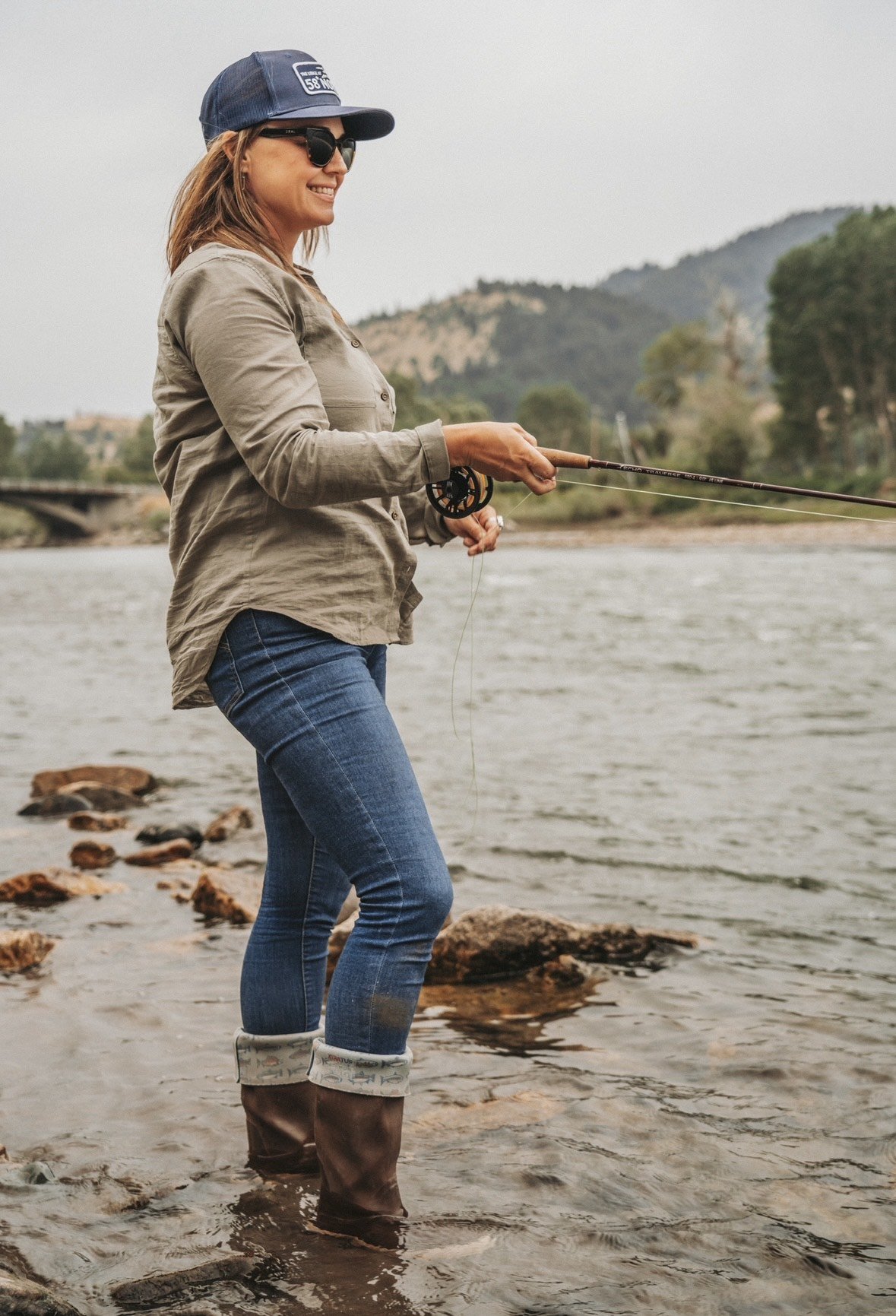
Wading Strong: Simple At Home Practices for Better Movement on the Water
Walking and wading may seem simple on the surface, but both can present a surprising number of physical challenges. This is especially true when we find ourselves moving through wild, uneven, and ungroomed terrain.
Increasing our capacity to move well as we explore fisheries and wild places is one of the best ways to keep ourselves returning to them for years to come. While simply spending time outdoors is a powerful driver of resilience, there are also small, simple practices we can integrate into daily life that carry real impact. For anglers who spend long days covering ground, as well as those newer to wading, refining the foundational skills that support walking, balance, and stability matters. Below are a few accessible ways to do exactly that, all from home.
Single Leg Balance
For yogis or martial artists, single leg balance may already feel familiar. What’s often overlooked is that walking itself is essentially a repeated sequence of single leg balancing, just performed more quickly. While wading, we’re frequently asked to balance on one leg for longer or more deliberate periods of time. Whether you’re untangling a fly from a boot lace or carefully extracting one foot from deep mud, the ability to stand well on one leg is incredibly useful.
Try: Stand on one foot for short periods throughout the day. Brush your teeth, wait for the kettle to boil, or pause while standing in line. Use a wall or stable surface for support if needed, and gradually increase the duration over time. Practice on both sides, and as you improve you can integrate gaze shifts and head movement to challenge your balance even more.
Balanced Walking
All walking involves balance, but angling often demands variations that differ from everyday gait. Crossing downed trees, stepping through boulder fields, or navigating narrow banks requires more precision and control. Regular exposure to these types of walking patterns helps build neuromuscular awareness and preparedness.
Try: Incorporate a tightrope style walk into your routine. Practice heel to toe walking forward and backward in your driveway, yard, or indoor space. Use sidewalk seams or floor tiles as visual guides if available. As a progression, balance walk along a low beam or a 2x4.
Being Barefoot
Most modern footwear limits the foot’s ability to sense and adapt to the ground beneath it. Over time, this can reduce strength, resilience, and responsiveness in the feet and ankles. Spending intentional time barefoot gives the feet an opportunity to re engage with the environment and rebuild capacity.
Try: Begin spending more time barefoot at home. If your feet are usually confined to shoes or slippers, mild soreness is normal at first. Ease in gradually and vary the surfaces you walk on, such as carpet, hardwood, or outdoor ground. For those interested in minimalist footwear, this is a helpful transition strategy.
Toe Neuromapping
We often think of fingers as independent contributors to hand function, but rarely extend that same consideration to our toes. Strong, well coordinated toes play a significant role in balance and ground connection. Improving the brain to toe connection can meaningfully enhance stability.
Try: While barefoot and either seated or standing, lift and lower just your big toe, then switch to the other foot. Next, lift and lower the smaller toes while keeping the big toe down. Alternate sides and repeat for several rounds. Patience is key, this connection builds with practice.
Vestibular Drills
Beyond muscles and joints, the vestibular system plays a central role in balance. This sensory system integrates input from the inner ear and eyes to help orient the body in space. Simple vestibular drills can support this system, and many can be done seated.
Try: Sit comfortably and extend one arm straight out in front of you with a thumbs up. Keep your eyes focused on your thumb while turning your head left and right, then up and down. Perform several repetitions in each direction. Progress by standing, then eventually practicing on one leg.
Myofascial Release for the Feet
Soft tissue health influences how well the feet sense and respond to the ground. Myofascial release can support mobility, overall tissue quality and hydration, and sensory awareness.
Try: Roll the soles of your feet using a ball. A tennis ball is a good starting point for sensitive feet, while firmer balls can be introduced over time. Cover the entire surface from the ball mounds to the heel, paying attention to the arches. Use pressure that feels sustainable and avoid pain. Roll forward and backward, as well as side to side, to explore different tissue layers.
Walking and wading well isn’t about doing anything extreme. It’s about building a foundation of balance, awareness, and adaptability that supports you every time you step into moving water or uneven ground. These small practices add up, helping you feel steadier, more confident, and more capable wherever your fishing takes you.
Mindfulness on the Water: Simple Practices to Deepen Your Fly Fishing Experience
It’s no new revelation that fly angling lends itself to being a deeply therapeutic pursuit. There are long standing organizations such as Casting for Recovery, Project Healing Waters, and The Mayfly Project, just to name a few, many of whom have devoted decades to creating space for healing through fly fishing. Volumes of literature speak to the deeper experiences we encounter on the water, and perhaps now more than ever, the idea that many of us are fishing for something greater than the fish themselves has become increasingly mainstream.
This points to a few core truths. We have a collective need to connect more deeply with ourselves, a collective need to reconnect with the natural world, and, quite often, a need to feel genuine connection within community as well. Fly fishing facilitates all of this and then some. It offers physical, psychological, and interpersonal benefits simply by nature of the experience. I sometimes wonder if the pull I feel toward the river is actually coming from the many systems of my mind and body quietly reminding me that I need time moving, breathing, and being outdoors. I usually listen, and I almost always leave feeling better than when I arrived.
One of the things that keeps fly angling endlessly engaging is its wide and expansive scope. There are always new fly patterns to learn, new water to explore, new species to pursue, and new casting skills to refine. In the spirit of honoring that richness, there are also meaningful ways to shift our perspective and intention while we’re out getting a line wet.
While fly fishing has often been compared to practices like yoga or Taoism, it truly stands on its own as a uniquely complete and well rounded wellness practice. For those who feel called to layer in a little more presence while on the water or in the woods, here are a few simple mindfulness practices that integrate naturally into a day of fishing.
Breath Awareness
We’re breathing all day long, which means we have an incredibly powerful tool available to us at any moment. Breath awareness can take many forms, depending on the individual and what they’re hoping to cultivate. For many people, simply paying attention to the breath is deeply grounding. It draws us into the present moment, provides a rhythmic focal point, and gently settles the nervous system.
Try: Breath counts. Research suggests that six nasal breaths per minute supports nervous system regulation. Each breath follows a five second inhale and a five second exhale. The next time you arrive at a run and decide to pause and observe, which is almost always worthwhile, try twenty counted breaths using this pattern. It pairs beautifully with reading the water before tying on a fly and taking your first cast.
Mindful Movement
No complicated or pretzel like postures required. Mindful movement simply means paying attention to how you move. A great place to start is by slowing down. Instead of rushing to the next stretch of river or charging toward the opposite bank, take more deliberate and intentional steps. Walking itself is a powerful way to inhabit the body more fully and quiet mental noise.
Try: While wading, experiment with a forefoot first gait pattern, then gently lower the heel. This approach is well suited for uneven and variable terrain and often helps reduce slips and falls. The forefoot refers to the ball of the foot just beneath the toes, not the toes themselves. It offers a broad surface area for stability before completing the step.
Sensory Mapping
Sensory mapping is a well known mindfulness practice that involves consciously tuning into the senses. You can focus on one sense at a time or move through several in sequence. At any point during the day, pause and notice what you’re experiencing through smell, sound, sight, texture, temperature, and physical sensation. Fly fishing naturally lends itself to this practice, especially when stopping to read a new run.
Try: Upon arrival, or even while moving, focus on listening. Notice sounds to the north, south, east, and west of you. Some people enjoy sketching these observations as a literal sensory map, though simply noticing is more than enough.
Intention Setting
Intention setting is similar to goal setting, but without the pressure of performance. It offers a central point of focus while remaining flexible rather than outcome driven. Asking yourself why you chose to come out today is a useful starting point. The surface answer is often “to fish,” but digging a little deeper might reveal intentions such as resting, exploring somewhere new, spending time with a friend, or simply being somewhere quiet. Understanding how you’re showing up helps inform where you go, the pace you keep, and how you engage with the day. And if your intention truly is to feel the tug of a fish on the line, that’s a perfectly valid choice, and one best supported by selecting water where success is likely.
Try: Once you arrive, take a minute or two before moving ahead. Scan your body and notice areas of tension, fatigue, or soreness. Take inventory of your energy, stress level, emotional state, and mental clarity. Understanding your internal landscape is a powerful way to guide your decisions on the water.
Gratitude Scanning
Gratitude sometimes gets wrapped up in clichés, but acknowledging it has measurable effects on perspective, mood, well being, and even brain health. It’s simple, effective, and often overlooked. When we become accustomed to certain places, people, or experiences, it’s easy to take them for granted. A gratitude practice helps interrupt that pattern.
Try: Bookend your time on the water with a brief gratitude scan. Identify two things you’re grateful for upon arrival, and two different things upon departure. There are no rules. You can write them down, take photos, or simply reflect quietly for a moment.
Not every day on the water needs to include extra structure or intention. One of the greatest gifts of fly fishing is how stripped down and simple it can be, free from the to do lists that often dominate daily life. Sometimes focusing on nothing more than the rod in your hand and the insects moving through the brush is exactly what’s needed. Other days, cheering on a friend as they land a fish is more than enough. Regardless of the context, weaving mindfulness into your time outdoors tends to enhance the experience. Over time, these simple practices become second nature, integrated as seamlessly as reading water, seating knots, and pausing to watch a fish kick free and swim away.
The Physical Feat of Mindfully Landing, Handling, and Releasing Fish
For the budding new angler, or those who tend to hit the water with guides or buddies more often than not,you may be in for a bit of a surprise when you first realize that netting your own fish can wind up being the greatest physical feat of the day.
While we’ve been fortunate in recent years to have excellent organizations like Keep Fish Wet leading the charge in safe fish handling education, implementing these best practices can come with a few unexpected asks from your physical self. Executed with ease and sometimes taken for granted, landing and releasing a fish with care often involves far more coordination, mobility, and awareness than it appears.
Below is a breakdown of some of the key physical elements involved in a solid landing, handling, and release, along with simple, practical ways to support your body off the water so you can better care for your fish on it.
Shoulder Mobility
It should go without saying that fly casting demands a fair amount of shoulder mobility. What’s often less obvious is how much shoulder flexion,arm overhead,you need when netting your own fish. This position places additional demands on the shoulder girdle, especially when paired with uneven footing or flowing water.
Maintaining well-moving shoulders is essential, particularly during the net-and-release phase.
Try: Shoulder CARs (Controlled Articular Rotations) are one of the most effective ways to build and maintain usable shoulder range of motion and control. These can be done seated, standing, tall kneeling, or in a quadruped position. A quick daily set of slow, intentional rotations goes a long way in keeping this complex joint system healthy.
Reaching
With the lift of the rod comes an even longer reach from the net-handling arm. Reaching well requires coordination between the shoulder blade, shoulder capsule, arm, and spine. It’s a whole-body task, not just an arm movement.
Keeping these systems working together supports not only fish handling, but plenty of everyday movements as well.
Try: Stack movements by practicing single-arm or two-arm reaches while seated on the floor. Sit cross-legged and reach forward, overhead, and side to side, then switch which leg is in front. Other useful positions include legs straight out, straddled, or any type of squat. Use a yoga block, bolster, or pillows under your seat as needed. Adding gentle trunk rotation can further support spinal health.
Grip Strength
And no, I’m not talking about death-gripping your fish. Please don’t.
Whether you’re using a rubber net or opting for a hands-free release, healthy hands and wrists matter. Even lightly managing a net handle or controlling slack line requires grip endurance and wrist control. When these areas aren’t up to the task, even simple actions can feel surprisingly challenging.
Try: Similar to shoulder CARs, daily wrist CARs performed slowly and intentionally can help maintain wrist mobility. Aim for three rotations in each direction. For added grip work, lightly squeeze a tennis ball while moving through the rotations.
Lower Body Mobility
One of the bigger challenges for many anglers is getting low enough to the water to safely remove a fly and release a fish,without lifting it out of the water. Limited ankle, knee, or hip mobility can make this difficult.
For many anglers, some variation of a squat is the most effective position for keeping fish submerged during release. A mobile lower body also supports checking water temperatures and navigating uneven terrain.
Try: Floor sitting is a deceptively effective way to build and maintain lower body mobility. Regularly shifting between seated positions moves the hips, knees, ankles, and pelvis through a wide range of angles. Use blankets or cushions as needed, and sit near a stable surface if you’ll need help standing back up. If floor sitting isn’t accessible, vary your seated positions in chairs or on the couch and incorporate ankle CARs throughout the day. Aim for about 30 minutes of floor time daily if possible.
Balance & Proprioception
Landing and releasing a fish often involves reaching, pivoting, squatting, and gripping,all while standing in moving water. In the excitement of the moment, it’s easy to forget that keeping your feet under you is still the foundation of the whole operation.
Stability isn’t about staying rigid; it’s about remaining steady within movement. Balance and spatial awareness are key.
Try: Start with sustained single-leg standing. As this becomes more comfortable, add movement,leg swings, arm reaches, or gentle hip hinges,to challenge your ability to re-stabilize. Use a wall or other support as needed while gradually increasing difficulty over time.
Surprisingly enough, safely handling and releasing fish may leave you with some unintentional mobility gains of your own. Keep those rod tips lifting and your squats plenty low.
And if you’re looking for motivation to invest in your movement practice off the water, becoming a more ethical, capable, and mindful angler is as good a reason as any. Your joints,and your fisheries,will thank you.
The Top Ten Things that I Love about Fly Fishing(that have nothing to do with catching fish)
I think most anyone who’s spent a decent amount of time on the water will agree that at some point we realize that fly fishing is about so much more than catching fish. This topic has been the focal point of countless literary works over many decades; what we find while we’re out looking for fish on the fly is the realization that we’ve stepped into a depth of experience that’s rarely matched by other sports. Many shy away from even referring to fly angling as a sport, and will more often liken it to an expression and experience of lived art. As we become increasingly engaged with our medium, what tends to grow is the desire to slow down, become a more keen observer, and absorb the details of our ecosystem more thoroughly. The joy and exhilaration of connecting with a fish on the fly is unique and fantastic in and of itself. And how lucky are we in knowing that there’s so much more to this practice than the fishing alone? Following is a short list of the top ten things that I love about fly fishing that have nothing to do with catching fish…
1-Bird Watching: The scavenging, hunting, calling, mating, and swooping down to swipe a fish right out of the water. Spending time returning to the same water throughout the seasons has allowed for me to witness the process of many species of birds nesting and nurturing their young. Bald eagles have always been a favorite. What a spectacular piece of nature to bear witness to.
2-Foraging & Identifying Plants: I began foraging prior to my introduction to fly fishing, but needless to say the two effortlessly complement one another. Discovering and identifying edible/medicinal plants while out exploring fisheries is such a delight. Likewise, learning how to better identify more plants, trees, and wildflowers even without harvesting is an intricate layer to the experience of being outdoors.
3-Walking & Moving in Nature: The amount of evidence that points to the positive physical and psychological effects that accompany simply being in the outdoors is enormous. I became so enthralled with the biomechanics of fly angling and exploring these wild places that I created an entire mindful movement method devoted to it. It’s a fascinating subject, and one where there’s always room for more exploration and evolution while we discover what it means to move well in the outdoors.
4-Witnessing Bugs Hatch: I’m not sure that I ever noticed hatches taking place before I began fly fishing, and of course now they’re impossible not to see whether I’m out on a fishing excursion or not. What a neat and detailed process, to begin to understand the entire life-cycle of these insects as they relate to the seasons and varied ecosystems that we explore.
5-Watching Wildlife at Work: I love witnessing the progress of beaver dams, nests, dens, beehives and abandoned beds. Sharing space with countless creatures and species that call these environments home always means that there’s so much taking place and to be seen within any stream, lake, forest, and field.
6-Snack Breaks: And not just while on the water, but also within the ritual of carefully selecting and gathering the days tastes and treats, securely tucking them away in anticipation of a moment later to come. Whether alone or in the company of others, those times where we locate a good log to perch on while nibbling on a sandwich or pulling out our portable french press to make a fresh batch of coffee are always a special and integral part of the experience.
7-Observing the Change in Light: From sun-up to sundown, whether it’s a blue bird day or one that’s overcast with diffused light. The golden hours are always tough to beat, but the entire days sequence of light as well as the warmth that it produces impacts how we feel and the paths that we choose to wander.
8-Watching Fish Rise: The slow emerger nips, the aggressive terrestrial nabs, and of course those vertical acrobatic caddis fly launches. While it can be challenging to not immediately cast to rising fish, the skillful angler and observer understand the value of pausing first. Over time I’ve found that sitting down and watching rises with a beverage in hand can be just as satisfying as the fishing itself.
9-The Wide World of Aromas: The fresh pine needles, wildflowers, sagebrush, grasses, soil, and manure all have their own unique scents to be experienced and enjoyed. As we know, our sense of smell has the strongest ability to trigger both emotion and memories. I also find that intentionally tapping into my sense of smell within any given environment tends to have a particularly grounding effect.
10-The Water: Its color, temperature, speed, depth, and structure. I love the huge amount of variance from one body of water to the next, along with studying the seasonal shifts that take place. Again, there’s something particularly engaging about returning to the same water features over the span of time. It offers all sorts of insight into how our climate is shifting, and how it is that we may be impacting the health of our fisheries.
I fell in love with fly fishing precisely because of its richness. It truly is a feast for the senses, a 10 course meal perfectly paired in some of the most beautiful venues the earth has to offer. Consequently, I’ve also found that the more time that I’ve spent shifting my gaze towards these many other elements, the stronger angler that I’ve become. Whether or not you have a tendency to be incredibly focused or catching fish every time you’re out on the water, or you feel fairly neutral about the catching itself, there’s always ample opportunity to enrich your experience in these ecosystems by simply seeing what’s there, and becoming actively and enthusiastically engaged with the gift that is exploring the great outdoors with a fly rod in hand.
Enjoy.