Not All Bobbers Are Created Equal: Better Buy The Best.
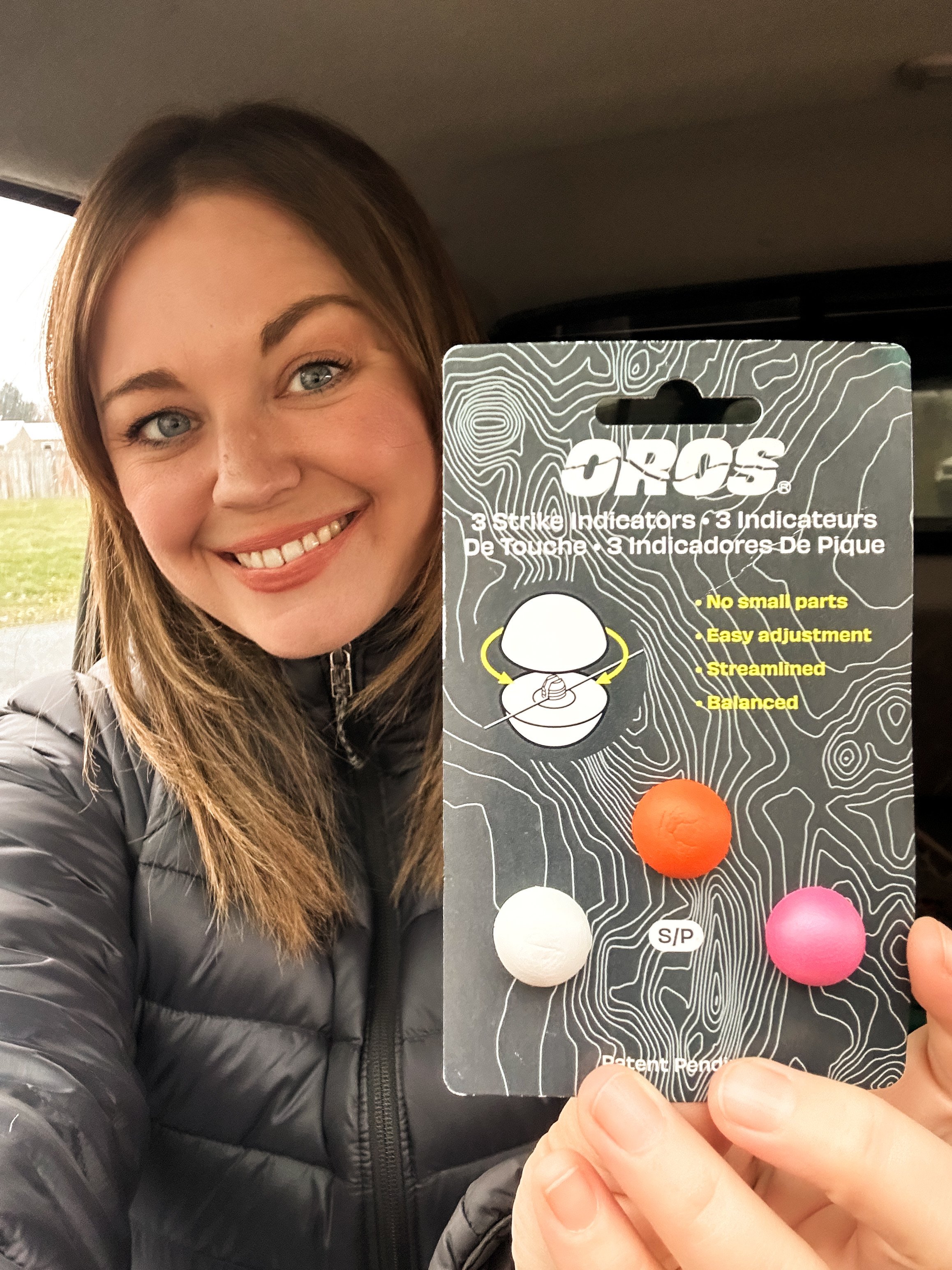
Let’s start by clearing the air: “strike indicators” are indeed bobbers. You heard it here first. New fly anglers, in case there’s been any confusion based upon terminology and fly fish jargon being thrown around, make note. And in case you weren’t already aware, bobbers are in fact used by many while fly fishing. Check out this YouTube video from Orvis that shares some of the basics of beginner bobber fly fishing with nymphs. On to the subject at hand…
Is there a brand of fly fishing bobber that’s far superior to the others?
The short answer is yes, in my opinion, after using most all of the stylers of strike indicators on the market, the OROS design lands on top. Here’s why:
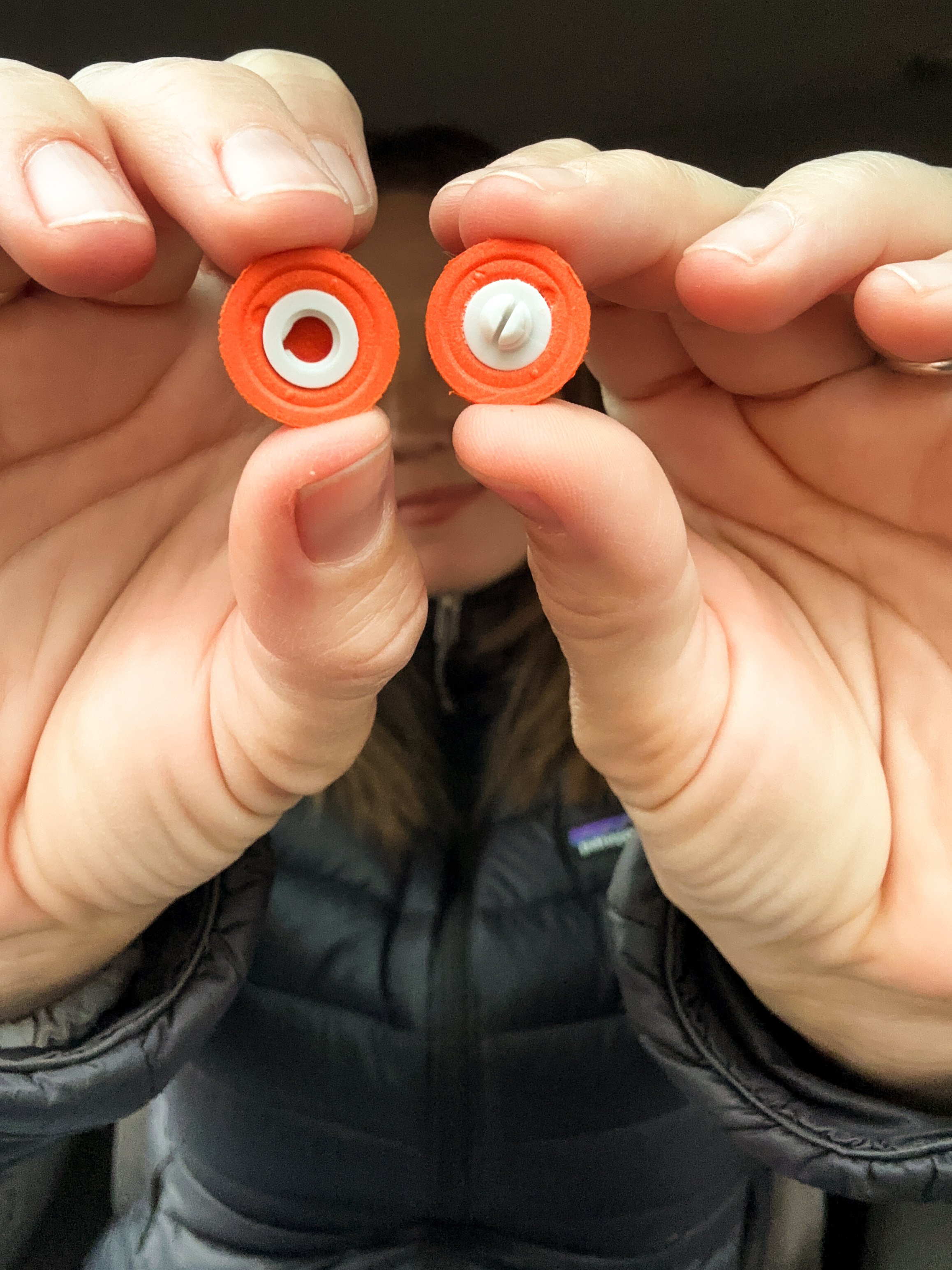
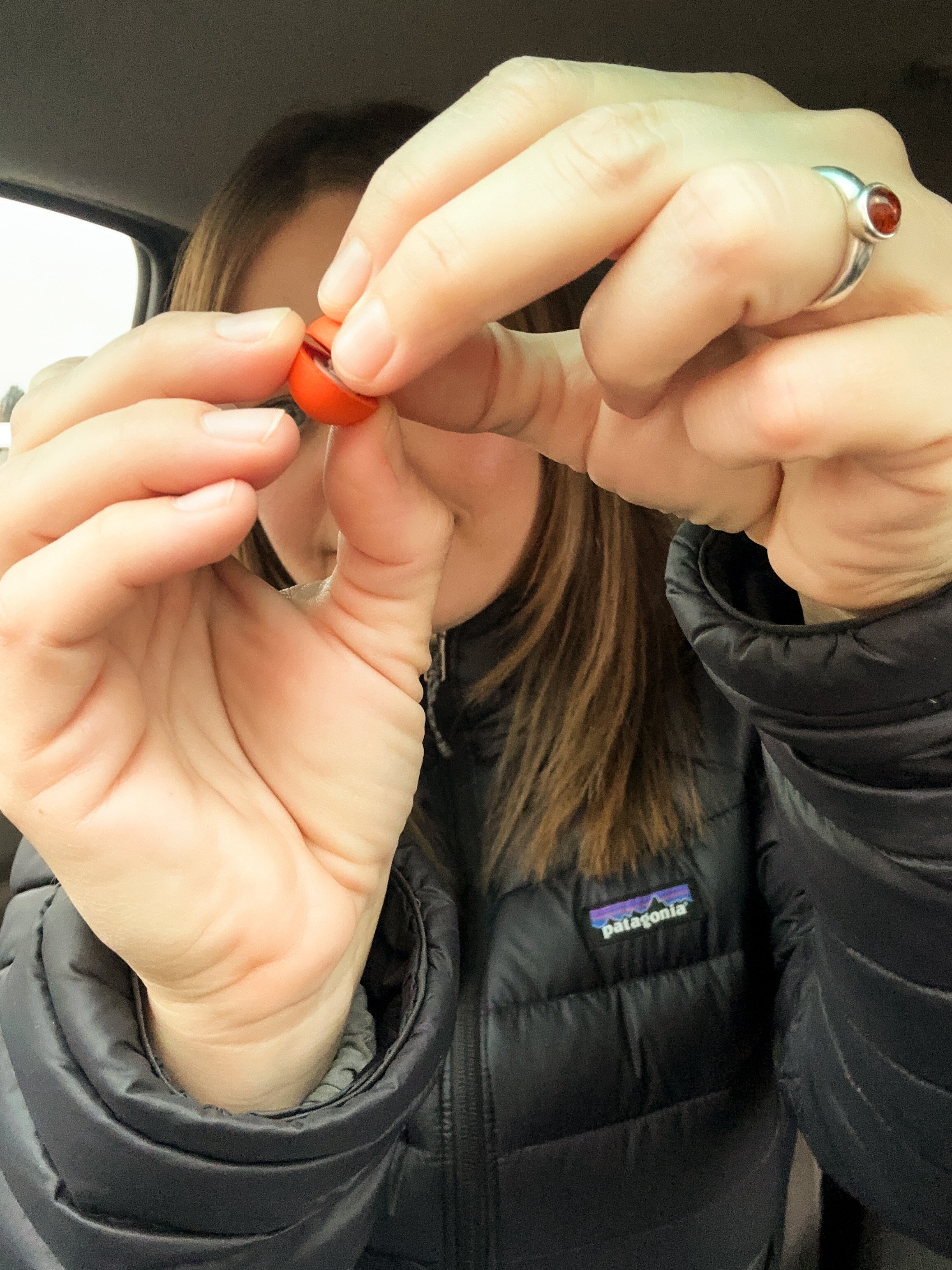
They’re easy to adjust on your rig. One of the banes of indicator nymph fishing is that it can require a fair amount of readjustment in order to ensure that your rig is the correct length while presenting your fly within the “strike zone”(areas where fish are present and feeding). Even more, if you’re nymphing on a stretch of water where there are distinct changes in water depth, readjusting the length between your bobber and fly is oftentimes necessary. The OROS design makes it incredibly easy to move your bobber up and down the length of your leader, making it simple and easy to execute those changes when needed.
They don’t kink your leader. While not always the case, there are various bobber designs that wind up bending your leader, leaving behind a kink and disruption within the smooth quality of your presentation once the bobber’s removed. The OROS design completely avoids creating any pesky bends in your leader.
They stay in place. If you haven’t experienced the headache of an indicator regularly sliding up and down your leader consider yourself lucky. OROS, when tightened appropriately, always manage to stay secured in place. A serious win.
They’re durable. What can I say, I just recently picked up a new three pack while going into the winter season which also happens to be my most heavy nymph fishing season, but I’ve had the same handful of OROS indicators for two years and they remain to be in great working order.
They’re user friendly. A feature that may be my #1, the OROS design is generally quite easy to handle, even for those of us who may not have the most nimble of fingers. While the fine tune motor skills required within fly fishing can serve as a barrier for plenty, these bobbers most definitely do their best to contribute to a greater landscape of accessibility.
Want to see the OROS in action along with an in-depth product review? Check out this share from Mad Rivers Outfitters on YouTube, another one of my favorite channels to explore for useful education and information. Click here to learn more about the OROS Strike Indicators on their website. Happy fishing, friends!
Fly Fish + Hiking Fly Box Essentials
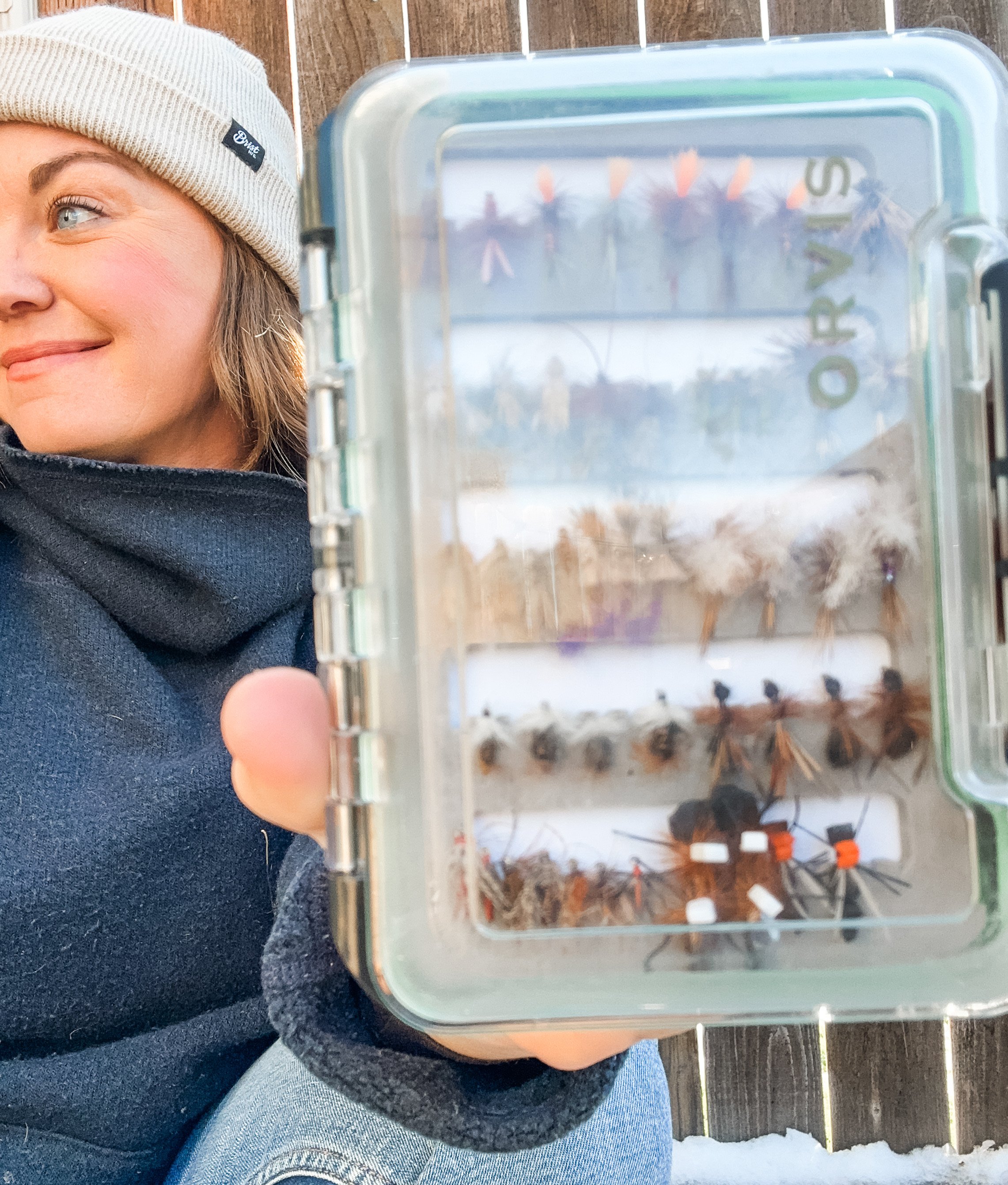
For those who love both day trip and multi-day hiking and fly fishing excursions, maximizing space in your backpack while ensuring that all of the essentials are along for the ride is critical. I’m certainly an angler who has oh so many fly boxes(too many fly boxes?), but when I’m hiking substantially longer distances to fish I tend to take a very different approach. Rather than filling up precious cargo space in my bag with multiple fly boxes, I prefer to carry one single box that checks all of the boxes. Because let’s be honest, snacks, water, and plenty of clothing layers need to be a priority. Check out how I go about organizing my hike and fly fish box….
Streamers
While everyone has their own methods and tactics when approaching the water, whether fishing a new destination or a regular hometown stretch, I’m often one who opts for small streamers while prospecting for trout. These flies which are typically fashioned to imitate small baitfish are incredibly versatile and can be fished in a variety of ways both on still water(lakes and reservoirs) as well as rivers and streams. Check out this YouTube video from Orvis that serves as a great ‘how to’ highlighting streamer fishing for trout. I typically equip myself with several sizes and color variations of each pattern, leaning towards more natural colors(white, olive, tan, and black).
The top three streamers that always make it into my box:
Conehead Woolly Bugger
Egg Sucking Leech
Mini Sculpzilla
Dry Flies
Oftentimes the style of fly that’s most frequently associated with fly fishing, arming yourself with a solid array of versatile dry flies, whether they fall beneath the category of mayflies, caddis flies, stoneflies, midges, or terrestrials is essential. While many fly anglers have numerous fly boxes filled exclusively with dry fly variations, when embarking upon more streamlined ventures it’s important to narrow it down to a well-rounded and simplified assortment that’s appropriate for the season. The overarching subject of dry flies tends to be rather vast, but this beginners guide to fly fishing dry flies is a great starting point.
The top SIX that always make it into my box(because I couldn’t just pick three):
X-Caddis(olive)
Stimulator(orange and/or yellow)
Purple Haze
Sparkle Dun(variation dependent upon the season)
Foam and/or Flying Ant
Renegade

Nymphs & Wet Flies
For those who’re new to the sport of fly fishing, what you may not realize is that the mass majority of the daily diet for a trout is acquired from subsurface food sources in the water. That’s where nymphs and wet flies step in. Variations of these fly patterns that are fished anywhere between the area just below surface of the water in the “film” or deep into the water column, even bouncing off of bottom, are incredibly productive. While there are many methods and techniques for fishing nymphs and wet flies, this video introduction to nymph and wet fly fishing, also created by Orvis, offers a firm foundation.
The top three nymphs that always make it into my box:
Sexy Walt’s Worm
Matchstick Quill Jig
Lite Brite(Purple and/or Pink)
The top three wet flies that always make it into my box:
Gold Ribbed Hares Ear
Red Ass Kelso
Birds Nest

Another important area to note is that in some circumstances hiking to fly fishing destinations can present some combination of biodiversity and elevation changes to be taken into account. If your outing is going to include a notable shift in environments don’t forget to bring along fly variations that speak to those particular environments that you may encounter. The flies that I tend to fish at 4000ft is at times quite a bit different from what I’m fishing at 8000ft on any given day. And even if you don’t live in a mountainous area potential changes in the ecosystem can certainly play a role in what insects are present, the temperature and condition of the water, and the behavior of the fish.
Stay tuned for some upcoming articles that dig a bit deeper into all of the fly fish and hiking gear, equipment, and apparel that I happen to love, as well as other pieces that highlight functional movement, mobility, and mindfulness methods to support your hikes while fly fishing. Winter can serve as a fantastic time to research, plan and plot, and get geared up for the upcoming Summer season ahead.

Five Ways to Stay Engaged with Your Fly Fishing Practice While at Home
While it’s probably safe to say that we all prefer our precious time spent adventuring on our favorite fisheries over all else, life doesn’t always allow for constant jaunts to our home waters or exciting new destination fisheries. The good news is that there are tons of ways to not only stay engaged and excited about our fly angling practice while at home, but those efforts that we make in-between our outings play a huge role in our growth as anglers. Here are a few of my favorite ways to continue learning and exploring while I’m hanging at home…
1) Organizing fly boxes.
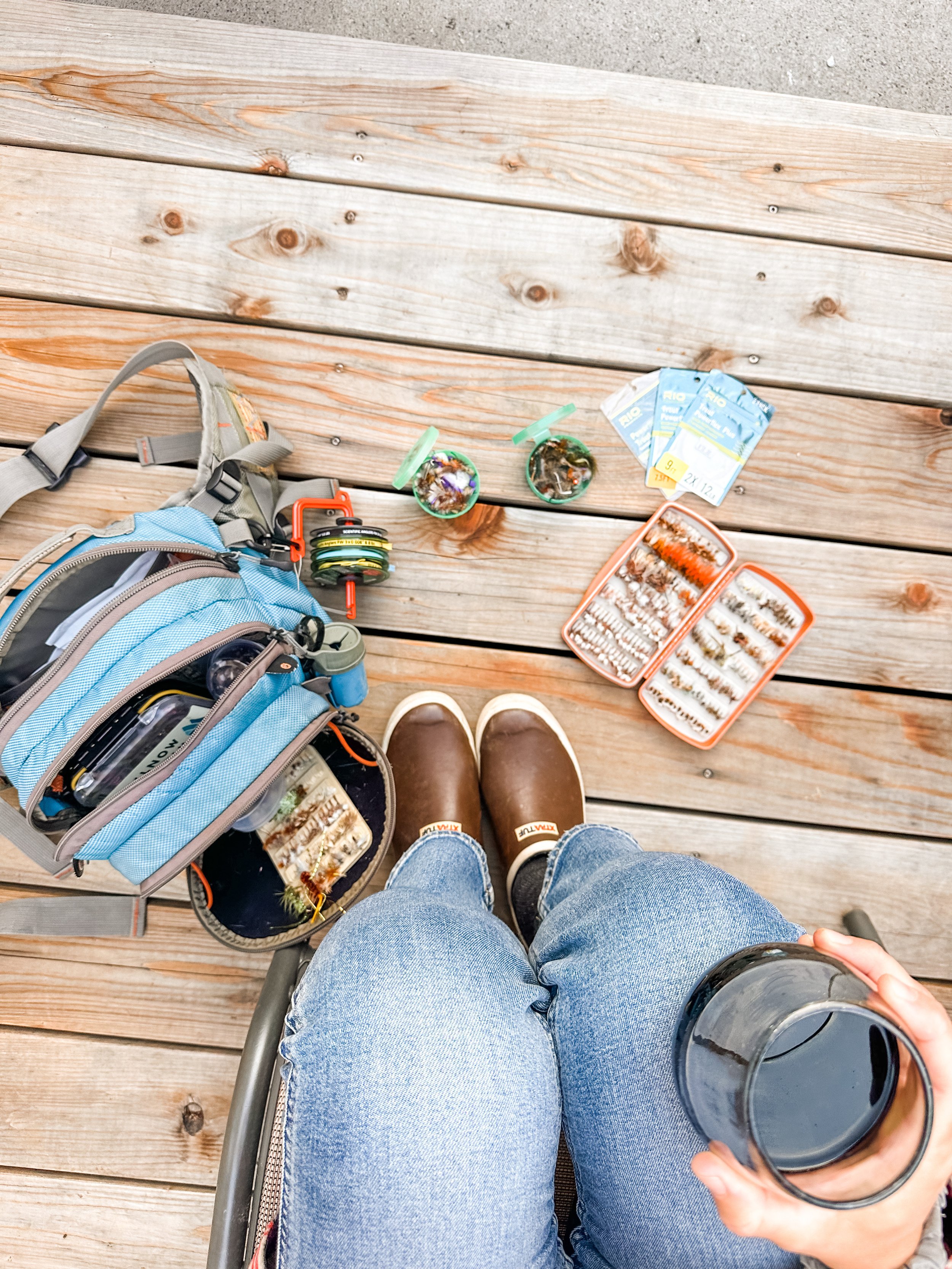
Setting aside time to organize my fly boxes remains to be one of my favorite at-home fly fishing activities. There are many different schools of thought in terms of how to go about this task; over the years I’ve tried on various methods and continue to experiment from time to time. While some organize via specific fly types designated to their own boxes(a box for nymphs, a box for dry flies, a box for streamers, etc.) others are more particular about orienting their boxes seasonally, regionally, or based upon specific insect life cycles. At the end of the day it’s really up to the individual angler and their own preferred way of locating their flies(while ensuring that they have exactly what they need) with ease while on the water. My personal favorite fly boxes on planet earth? Without a moments hesitation, that would be the Tacky Pescador fly boxes from Fishpond. I have several in a variety of sizes.
2) Taking inventory of gear.
This job tends to be fairly quick and easy for me, but it is an essential step nonetheless. Pieces of equipment that I frequently take inventory of in-between trips include: flies that may need replenishing, tippet, floatant, and leaders. I also never hit the water without a few snacks tucked into my pack, so any turkey sticks or granola bars that may have been consumed are always quick to be restocked for next time around. A hangry fly angler is not a happy fly angler! The three brands that I most regularly use to stock my fly line, leaders, tippet and floating include Loon Outdoors, Scientific Anglers, and Rio Products.
3) Crimping barbs.
While some of my flies are tied on barbless hooks, the mass majority do indeed contain barbs. Of the many different areas that compose my fly angling ethics, crimping my barbs is definitely high on my list. This gesture not only allows for quick and easy hook removals and a much less pronounced impact on fish, but it also makes all of the difference in the world in the case that a fly hook might unwittingly wind up in my own body or clothing. Everyone wins with a crimped barb, and what better way to save time on the water than to just de-barb your hooks while at home? Here’s a quick video tutorial on the Orvis YouTube channel that shares how to de-barb your hooks..

4) Practicing knots.
Practice makes perfect, as they say. The very best way to become proficient and swift while tying knots on the water is to build that muscle memory while at home. Depending upon the individual angler, the variety of species they target, and the types of fisheries that they explore, the essential knot knowledge needed will indeed vary. At the very least, most freshwater fly anglers will want to know the loop to loop, double surgeons, and the clinch and/or improved clinch knots as a baseline. Additional ties including the blood knot, nail knot, and a non-slip or perfection loop knot will also come in handy, too. You can use any material that you’d like while learning your knots(pictured here I’m repurposing some old fly line). I also recommend practicing your knots on your leader/tippet material as well since that will represent how you’ll experience tying them while on the water. You can find a great guide to basic fly fishing knots via this Orvis YouTube video with Tom Rosenbauer.

5) Study and research.
Finally, your preferred style of study and research is always an area that provides both education and inspiration. Of course the subject matter and topics available to dig into are nearly endless, from entomology to reading water to casting mechanics to specific species and their ecosystems. Beyond that, there’s certainly no shortage of narrative literature, short films and documentary, non-fiction work, podcasts, and blogs and social media content to keep you entertained and interested. A great option that I particularly love that seamlessly combines entertainment with education is the YETI YouTube channel. Choose your favorite medium and enjoy!
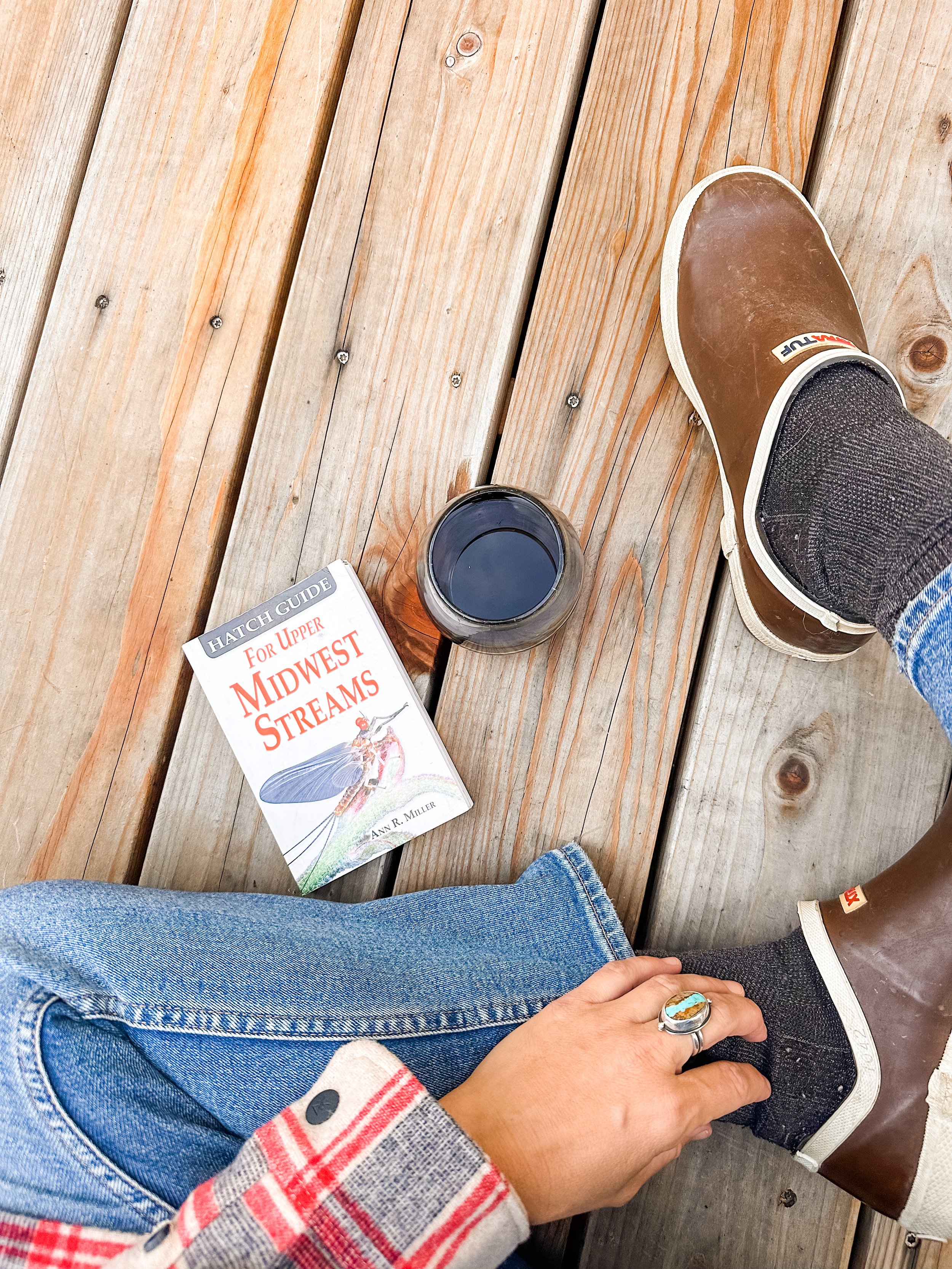
One more area that I didn’t mention is that of actual dry-land fly casting practice. In fact I love it so much that I developed my own unique and one of a kind Wade Well ‘Fluent Fly Casting Method’. That topic however is one expansive enough to save for a blog post all its own. Stay tuned!
Mindfulness on the Water: Simple Practices to Deepen Your Fly Fishing Experience
It’s no new revelation that fly angling lends itself to being a deeply therapeutic pursuit. There are long standing organizations such as Casting for Recovery, Project Healing Waters, and The Mayfly Project, just to name a few, many of whom have devoted decades to creating space for healing through fly fishing. Volumes of literature speak to the deeper experiences we encounter on the water, and perhaps now more than ever, the idea that many of us are fishing for something greater than the fish themselves has become increasingly mainstream.
This points to a few core truths. We have a collective need to connect more deeply with ourselves, a collective need to reconnect with the natural world, and, quite often, a need to feel genuine connection within community as well. Fly fishing facilitates all of this and then some. It offers physical, psychological, and interpersonal benefits simply by nature of the experience. I sometimes wonder if the pull I feel toward the river is actually coming from the many systems of my mind and body quietly reminding me that I need time moving, breathing, and being outdoors. I usually listen, and I almost always leave feeling better than when I arrived.
One of the things that keeps fly angling endlessly engaging is its wide and expansive scope. There are always new fly patterns to learn, new water to explore, new species to pursue, and new casting skills to refine. In the spirit of honoring that richness, there are also meaningful ways to shift our perspective and intention while we’re out getting a line wet.
While fly fishing has often been compared to practices like yoga or Taoism, it truly stands on its own as a uniquely complete and well rounded wellness practice. For those who feel called to layer in a little more presence while on the water or in the woods, here are a few simple mindfulness practices that integrate naturally into a day of fishing.
Breath Awareness
We’re breathing all day long, which means we have an incredibly powerful tool available to us at any moment. Breath awareness can take many forms, depending on the individual and what they’re hoping to cultivate. For many people, simply paying attention to the breath is deeply grounding. It draws us into the present moment, provides a rhythmic focal point, and gently settles the nervous system.
Try: Breath counts. Research suggests that six nasal breaths per minute supports nervous system regulation. Each breath follows a five second inhale and a five second exhale. The next time you arrive at a run and decide to pause and observe, which is almost always worthwhile, try twenty counted breaths using this pattern. It pairs beautifully with reading the water before tying on a fly and taking your first cast.
Mindful Movement
No complicated or pretzel like postures required. Mindful movement simply means paying attention to how you move. A great place to start is by slowing down. Instead of rushing to the next stretch of river or charging toward the opposite bank, take more deliberate and intentional steps. Walking itself is a powerful way to inhabit the body more fully and quiet mental noise.
Try: While wading, experiment with a forefoot first gait pattern, then gently lower the heel. This approach is well suited for uneven and variable terrain and often helps reduce slips and falls. The forefoot refers to the ball of the foot just beneath the toes, not the toes themselves. It offers a broad surface area for stability before completing the step.
Sensory Mapping
Sensory mapping is a well known mindfulness practice that involves consciously tuning into the senses. You can focus on one sense at a time or move through several in sequence. At any point during the day, pause and notice what you’re experiencing through smell, sound, sight, texture, temperature, and physical sensation. Fly fishing naturally lends itself to this practice, especially when stopping to read a new run.
Try: Upon arrival, or even while moving, focus on listening. Notice sounds to the north, south, east, and west of you. Some people enjoy sketching these observations as a literal sensory map, though simply noticing is more than enough.
Intention Setting
Intention setting is similar to goal setting, but without the pressure of performance. It offers a central point of focus while remaining flexible rather than outcome driven. Asking yourself why you chose to come out today is a useful starting point. The surface answer is often “to fish,” but digging a little deeper might reveal intentions such as resting, exploring somewhere new, spending time with a friend, or simply being somewhere quiet. Understanding how you’re showing up helps inform where you go, the pace you keep, and how you engage with the day. And if your intention truly is to feel the tug of a fish on the line, that’s a perfectly valid choice, and one best supported by selecting water where success is likely.
Try: Once you arrive, take a minute or two before moving ahead. Scan your body and notice areas of tension, fatigue, or soreness. Take inventory of your energy, stress level, emotional state, and mental clarity. Understanding your internal landscape is a powerful way to guide your decisions on the water.
Gratitude Scanning
Gratitude sometimes gets wrapped up in clichés, but acknowledging it has measurable effects on perspective, mood, well being, and even brain health. It’s simple, effective, and often overlooked. When we become accustomed to certain places, people, or experiences, it’s easy to take them for granted. A gratitude practice helps interrupt that pattern.
Try: Bookend your time on the water with a brief gratitude scan. Identify two things you’re grateful for upon arrival, and two different things upon departure. There are no rules. You can write them down, take photos, or simply reflect quietly for a moment.
Not every day on the water needs to include extra structure or intention. One of the greatest gifts of fly fishing is how stripped down and simple it can be, free from the to do lists that often dominate daily life. Sometimes focusing on nothing more than the rod in your hand and the insects moving through the brush is exactly what’s needed. Other days, cheering on a friend as they land a fish is more than enough. Regardless of the context, weaving mindfulness into your time outdoors tends to enhance the experience. Over time, these simple practices become second nature, integrated as seamlessly as reading water, seating knots, and pausing to watch a fish kick free and swim away.
The Physical Feat of Mindfully Landing, Handling, and Releasing Fish
For the budding new angler, or those who tend to hit the water with guides or buddies more often than not,you may be in for a bit of a surprise when you first realize that netting your own fish can wind up being the greatest physical feat of the day.
While we’ve been fortunate in recent years to have excellent organizations like Keep Fish Wet leading the charge in safe fish handling education, implementing these best practices can come with a few unexpected asks from your physical self. Executed with ease and sometimes taken for granted, landing and releasing a fish with care often involves far more coordination, mobility, and awareness than it appears.
Below is a breakdown of some of the key physical elements involved in a solid landing, handling, and release, along with simple, practical ways to support your body off the water so you can better care for your fish on it.
Shoulder Mobility
It should go without saying that fly casting demands a fair amount of shoulder mobility. What’s often less obvious is how much shoulder flexion,arm overhead,you need when netting your own fish. This position places additional demands on the shoulder girdle, especially when paired with uneven footing or flowing water.
Maintaining well-moving shoulders is essential, particularly during the net-and-release phase.
Try: Shoulder CARs (Controlled Articular Rotations) are one of the most effective ways to build and maintain usable shoulder range of motion and control. These can be done seated, standing, tall kneeling, or in a quadruped position. A quick daily set of slow, intentional rotations goes a long way in keeping this complex joint system healthy.
Reaching
With the lift of the rod comes an even longer reach from the net-handling arm. Reaching well requires coordination between the shoulder blade, shoulder capsule, arm, and spine. It’s a whole-body task, not just an arm movement.
Keeping these systems working together supports not only fish handling, but plenty of everyday movements as well.
Try: Stack movements by practicing single-arm or two-arm reaches while seated on the floor. Sit cross-legged and reach forward, overhead, and side to side, then switch which leg is in front. Other useful positions include legs straight out, straddled, or any type of squat. Use a yoga block, bolster, or pillows under your seat as needed. Adding gentle trunk rotation can further support spinal health.
Grip Strength
And no, I’m not talking about death-gripping your fish. Please don’t.
Whether you’re using a rubber net or opting for a hands-free release, healthy hands and wrists matter. Even lightly managing a net handle or controlling slack line requires grip endurance and wrist control. When these areas aren’t up to the task, even simple actions can feel surprisingly challenging.
Try: Similar to shoulder CARs, daily wrist CARs performed slowly and intentionally can help maintain wrist mobility. Aim for three rotations in each direction. For added grip work, lightly squeeze a tennis ball while moving through the rotations.
Lower Body Mobility
One of the bigger challenges for many anglers is getting low enough to the water to safely remove a fly and release a fish,without lifting it out of the water. Limited ankle, knee, or hip mobility can make this difficult.
For many anglers, some variation of a squat is the most effective position for keeping fish submerged during release. A mobile lower body also supports checking water temperatures and navigating uneven terrain.
Try: Floor sitting is a deceptively effective way to build and maintain lower body mobility. Regularly shifting between seated positions moves the hips, knees, ankles, and pelvis through a wide range of angles. Use blankets or cushions as needed, and sit near a stable surface if you’ll need help standing back up. If floor sitting isn’t accessible, vary your seated positions in chairs or on the couch and incorporate ankle CARs throughout the day. Aim for about 30 minutes of floor time daily if possible.
Balance & Proprioception
Landing and releasing a fish often involves reaching, pivoting, squatting, and gripping,all while standing in moving water. In the excitement of the moment, it’s easy to forget that keeping your feet under you is still the foundation of the whole operation.
Stability isn’t about staying rigid; it’s about remaining steady within movement. Balance and spatial awareness are key.
Try: Start with sustained single-leg standing. As this becomes more comfortable, add movement,leg swings, arm reaches, or gentle hip hinges,to challenge your ability to re-stabilize. Use a wall or other support as needed while gradually increasing difficulty over time.
Surprisingly enough, safely handling and releasing fish may leave you with some unintentional mobility gains of your own. Keep those rod tips lifting and your squats plenty low.
And if you’re looking for motivation to invest in your movement practice off the water, becoming a more ethical, capable, and mindful angler is as good a reason as any. Your joints,and your fisheries,will thank you.